

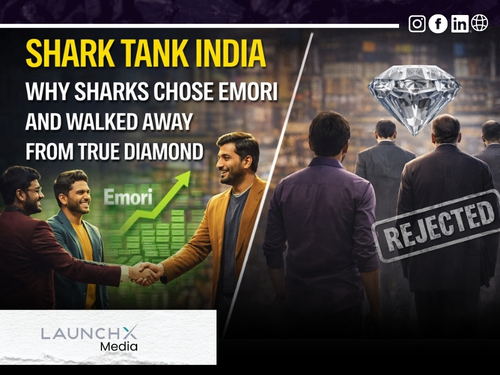

Shark Tank India: Why Sharks Chose Emori and Walked Away from True Diamond
Shark Tank India Decision Explained: 7 Reasons Emori Won Investor Trust
Shark Tank India has become more than just a reality show. It’s now a real-time classroom for founders, investors, and aspiring entrepreneurs across the country. One recent episode sparked widespread discussion when the Sharks chose Emori while declining to invest in True Diamond, despite both operating in consumer-focused segments.
- Shark Tank India Decision Explained: 7 Reasons Emori Won Investor Trust
- Emori vs True Diamond: A Quick Snapshot
- What Made Emori Stand Out to the Sharks
- 1. Clear and Scalable Business Model
- 2. Strong Brand Story and Market Fit
- 3. Founder Mindset and Coachability
- Why Sharks Walked Away from True Diamond
- The Bigger Lesson for Indian Startups
- What Aspiring Founders Can Learn From This Episode
- FAQs (10)
So what really tipped the scale?
Let’s break down the decision using a mix of news analysis and startup storytelling.

Emori vs True Diamond: A Quick Snapshot
Both brands entered the tank with ambition, confidence, and products they believed could win investor backing. However, Shark Tank isn’t about products alone — it’s about vision, scalability, and execution.
Emori at a Glance
Clear D2C positioning
Strong branding and storytelling
Scalable product ecosystem
Founder clarity on growth
True Diamond at a Glance
Premium product focus
Traditional category challenges
Limited scalability signals
Valuation concerns

What Made Emori Stand Out to the Sharks
1. Clear and Scalable Business Model
One of the strongest reasons Emori won investor confidence was its well-defined business model. The Sharks could clearly see:
Who the customer is
How the product fits into daily life
How revenues can scale without heavy operational friction
Scalability is non-negotiable for investors, and Emori checked that box convincingly.
2. Strong Brand Story and Market Fit
Emori didn’t just sell a product — it sold a brand narrative. The founders understood:
Their audience’s pain points
Emotional triggers behind purchase decisions
How branding creates long-term loyalty
In contrast, True Diamond struggled to communicate a compelling differentiation in a crowded, trust-heavy category.
3. Founder Mindset and Coachability
Sharks don’t just invest in companies — they invest in founders.
Emori’s founders showed:
Openness to feedback
Strategic thinking
Willingness to pivot
True Diamond’s pitch, while confident, appeared less flexible, raising concerns about adaptability in a fast-changing market.
Why Sharks Walked Away from True Diamond
1. High Valuation With Limited Justification
One of the biggest red flags was valuation. Sharks look for:
Strong margins
Proven demand
Clear growth levers
True Diamond’s numbers didn’t convincingly support the ask, making the deal risky from an investor standpoint.
2. Category Challenges in Scaling
Premium and trust-based categories like diamonds come with:
Longer sales cycles
High customer acquisition costs
Limited impulse buying
These factors made the business less attractive for venture-style returns.
3. Differentiation Gap
While the product quality wasn’t questioned, Sharks struggled to see:
A strong moat
Defensible innovation
A clear reason customers would switch brands
Without differentiation, scaling becomes expensive and uncertain.

The Bigger Lesson for Indian Startups
This episode reinforces a key truth about India’s startup ecosystem:
Great products don’t guarantee funding. Great businesses do.
Investors look for:
Market size
Execution capability
Founder adaptability
Clear long-term vision
Emori aligned well with these expectations. True Diamond, despite potential, didn’t fully bridge the gap.
What Aspiring Founders Can Learn From This Episode
Key Takeaways:
Storytelling matters as much as numbers
Scalability beats perfection
Valuation must match traction
Founders must show flexibility
Shark Tank India continues to be a mirror of real-world startup investing — tough, analytical, and forward-looking.

FAQs (10)
1. Why did Sharks invest in Emori?
Because of its scalable model, strong branding, and founder clarity.
2. Why was True Diamond rejected?
Due to valuation concerns, scalability issues, and limited differentiation.
3. Is product quality enough to get funding?
No. Investors prioritize growth potential and execution.
4. What impressed Sharks most about Emori?
Market fit, storytelling, and long-term scalability.
5. Did True Diamond have potential?
Yes, but not aligned with venture investment expectations.
6. How important is valuation on Shark Tank India?
Extremely important — unrealistic valuations often kill deals.
7. Do Sharks prefer D2C brands?
D2C brands are often more scalable and data-driven.
8. Can rejected startups still succeed?
Absolutely. Many rejections go on to build strong businesses.
9. What do Sharks look for in founders?
Coachability, clarity, resilience, and strategic thinking.
10. Is Shark Tank India realistic?
Yes, it closely mirrors real investor decision-making.


