
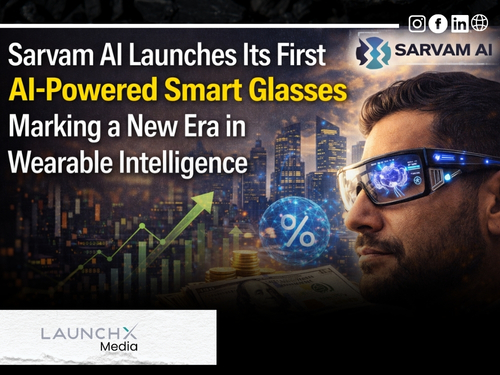

Sarvam AI Launches Its First AI-Powered Smart Glasses, Marking a New Era in Wearable Intelligence
Sarvam AI Smart Glasses: 9 Breakthrough Features That Signal a Bold Tech Leap
India’s AI innovation landscape has taken a significant step forward with the launch of AI-powered smart glasses by Sarvam AI. The new wearable device signals the country’s growing ambition to compete in the global artificial intelligence and consumer technology space.
- Sarvam AI Smart Glasses: 9 Breakthrough Features That Signal a Bold Tech Leap
- The Rise of AI Wearables in India
- What Makes These Smart Glasses Stand Out
- Strategic Significance for India’s Tech Ecosystem
- The Global Context: AI Wearables Are the Next Big Shift
- Opportunities for Startups and Developers
- Challenges in the AI Wearable Space
- What This Means for the Future of AI in India
- The Road Ahead for AI-Powered Wearables
- 1. What are AI-powered smart glasses?
- 2. Who launched the smart glasses?
- 3. What makes these glasses different from normal wearables?
- 4. What are the main use cases?
- 5. Are AI smart glasses the future of wearables?
- 6. Will enterprises adopt this technology?
- 7. What challenges exist for adoption?
- 8. Can developers build apps for such devices?
- 9. How does this impact India’s startup ecosystem?
- 10. What does this mean for consumers?
The launch gained national attention as Narendra Modi became one of the first individuals to experience the smart glasses, highlighting the importance of homegrown AI innovation and deep-tech development.
This milestone reflects how Indian startups are moving beyond software into advanced hardware and AI-driven consumer devices.

The Rise of AI Wearables in India
Wearable technology has evolved rapidly—from fitness trackers and smartwatches to immersive augmented reality devices. AI-powered smart glasses represent the next stage of this transformation.
These devices combine:
artificial intelligence
real-time data processing
contextual computing
hands-free digital interaction
The goal is to make technology more intuitive, accessible, and seamlessly integrated into daily life.
What Makes These Smart Glasses Stand Out
AI-First Approach
Unlike traditional wearable devices, these smart glasses are built around AI functionality. They are designed to:
interpret voice commands
provide contextual information
assist with productivity tasks
enhance communication experiences
support real-time digital interactions
This positions them as more than just gadgets—they are digital companions.
Potential Everyday Use Cases
AI-powered smart glasses could transform how people interact with technology across multiple scenarios:
navigation assistance
workplace productivity
accessibility support
education and learning
communication and collaboration
Their hands-free functionality makes them especially useful for professionals, students, and enterprise users.

Strategic Significance for India’s Tech Ecosystem
Moving from Software to Hardware Innovation
India has long been known for software and IT services. The development of AI-enabled hardware signals a shift toward deeper technological capabilities.
Key implications include:
growth in deep-tech startups
stronger hardware innovation ecosystem
global competitiveness in AI devices
domestic product development
This transition strengthens India’s position in emerging technologies.
National Technology Ambitions
The launch aligns with India’s broader push toward:
digital transformation
AI leadership
innovation-led entrepreneurship
self-reliance in technology
Government support and startup momentum together are creating an environment where such innovations can thrive.

The Global Context: AI Wearables Are the Next Big Shift
Globally, companies are investing heavily in wearable AI technologies. Smart glasses are expected to become central to:
augmented reality experiences
enterprise productivity tools
real-time information systems
personal AI assistants
India’s entry into this space shows its readiness to participate in the next wave of consumer and enterprise technology innovation.
Opportunities for Startups and Developers
The launch of AI smart glasses opens new possibilities for:
app developers
AI model builders
hardware designers
enterprise solution providers
An ecosystem could emerge around:
software integrations
enterprise applications
accessibility tools
immersive learning experiences
This creates opportunities beyond just a single device launch.

Challenges in the AI Wearable Space
Despite the excitement, challenges remain:
affordability and mass adoption
battery efficiency
privacy concerns
user experience design
ecosystem development
Startups will need to balance innovation with usability and accessibility.
What This Means for the Future of AI in India
The introduction of AI smart glasses signals a broader shift:
consumer AI is becoming mainstream
hardware innovation is accelerating
startups are exploring deep-tech opportunities
India is entering the global wearable AI race
This development could inspire more startups to build AI-driven hardware products.
The Road Ahead for AI-Powered Wearables
The future of wearable technology will likely include:
advanced augmented reality integration
enterprise productivity tools
real-time language translation
health monitoring features
immersive digital experiences
As AI capabilities improve, smart glasses could evolve into everyday computing devices.

FAQs (10)
1. What are AI-powered smart glasses?
Wearable devices that use artificial intelligence to assist users with tasks, information, and real-time interaction.
2. Who launched the smart glasses?
Indian AI startup Sarvam AI introduced the device.
3. What makes these glasses different from normal wearables?
They integrate AI for contextual computing and hands-free interaction.
4. What are the main use cases?
Navigation, productivity, accessibility, communication, and education.
5. Are AI smart glasses the future of wearables?
They are expected to play a major role in the next generation of computing.
6. Will enterprises adopt this technology?
Yes, especially for productivity, training, and operational support.
7. What challenges exist for adoption?
Cost, battery performance, privacy concerns, and ecosystem development.
8. Can developers build apps for such devices?
Yes, an ecosystem of software and applications can emerge around them.
9. How does this impact India’s startup ecosystem?
It encourages deep-tech innovation and hardware development.
10. What does this mean for consumers?
More intuitive, AI-powered, hands-free digital experiences in daily life.