

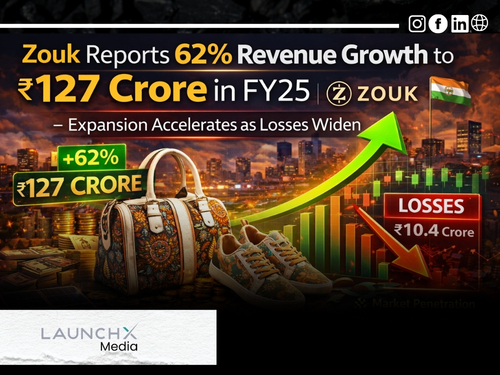

Zouk Reports 62% Revenue Growth to ₹127 Crore in FY25: Expansion Accelerates as Losses Widen
Zouk FY25 Results: 5 Powerful Reasons the D2C Brand Hit ₹127 Crore Revenue
Indian D2C brand Zouk has posted impressive top-line growth in FY25, with revenue climbing 62% to ₹127 crore. However, alongside this expansion, the company’s losses have widened to ₹19.6 crore, reflecting the cost of scaling in a competitive consumer market.
- Zouk FY25 Results: 5 Powerful Reasons the D2C Brand Hit ₹127 Crore Revenue
- The Zouk Brand Story: Indian Design Meets Modern Retail
- FY25 Financial Performance: A Closer Look
- Why Are D2C Brands Expanding Aggressively?
- Zouk’s Business Model: D2C Plus Omnichannel
- Growth vs Profitability: The Balancing Act
- Competitive Landscape in Indian Accessories Market
- Financial Insights: What the Numbers Suggest
- What Could Drive Profitability in the Future?
- 1. Improved Unit Economics
- 2. Higher Repeat Purchases
- 3. Premium Product Lines
- 4. International Expansion
- Lessons for Indian Startups
- The Road Ahead for Zouk
- Final Thoughts
- 1. What is Zouk’s revenue in FY25?
- 2. How much loss did Zouk report in FY25?
- 3. What does Zouk sell?
- 4. Who founded Zouk?
- 5. Why did Zouk’s losses increase?
- 6. Is revenue growth positive despite losses?
- 7. What is Zouk’s business model?
- 8. Does Zouk focus on sustainable products?
- 9. Can Zouk become profitable?
- 10. What industry does Zouk operate in?
Founded by an IIM Ahmedabad alumni couple, Zouk has positioned itself as a proudly Indian, vegan, and contemporary accessories brand. Its journey reflects the modern D2C playbook — rapid expansion, brand building, and aggressive customer acquisition — sometimes at the expense of short-term profitability.
Let’s break down what the numbers reveal and what lies ahead for the brand.

The Zouk Brand Story: Indian Design Meets Modern Retail
Zouk entered the market with a clear identity:
100% vegan products
Indian-inspired prints
Contemporary urban designs
Affordable luxury positioning
The brand primarily sells:
Handbags
Laptop bags
Wallets
Travel accessories
Its differentiation lies in combining Indian aesthetics with modern functionality — a segment that has seen growing demand among urban consumers.

FY25 Financial Performance: A Closer Look
Revenue Climbs 62% to ₹127 Crore
The jump to ₹127 crore in revenue marks a strong growth phase for Zouk.
Key drivers likely include:
Expansion of product categories
Increased digital marketing reach
Growth in online marketplaces
Retail store expansion
Repeat customer purchases
A 62% growth rate in today’s funding-tight environment signals strong consumer demand and brand traction.
Loss Widens to ₹19.6 Crore
While revenue surged, losses expanded to ₹19.6 crore.
Possible reasons:
Higher marketing spends
Retail expansion costs
Inventory management expenses
Operational scaling
Hiring and infrastructure investments
For D2C brands, growth often comes with upfront investments that temporarily impact profitability.
Why Are D2C Brands Expanding Aggressively?
The Indian D2C ecosystem operates on a scale-first model.
Market Opportunity Is Massive
India’s fashion and accessories market continues to grow due to:
Rising disposable income
Increased online shopping
Aspirational middle-class consumers
Growth of Tier-2 and Tier-3 cities
Capturing market share early can create long-term brand value.
Branding Is a Long-Term Game
Building a lifestyle brand requires:
Strong storytelling
Heavy digital advertising
Influencer collaborations
Offline brand visibility
These initiatives drive growth but increase short-term expenses.

Zouk’s Business Model: D2C Plus Omnichannel
Online-First Strategy
Zouk leveraged:
E-commerce platforms
Direct website sales
Social media marketing
Performance advertising
Online channels helped scale quickly across India.
Offline Retail Push
The brand has also expanded into physical retail.
Retail expansion typically involves:
Store rentals
Staff hiring
Visual merchandising
Inventory stocking
While it increases costs initially, offline presence boosts credibility and brand trust.
Growth vs Profitability: The Balancing Act
The widening loss raises an important question: Is this sustainable?
In startup economics, profitability often follows scale. If:
Customer acquisition cost stabilizes
Repeat purchase rate increases
Marketing efficiency improves
Losses can narrow over time.
Investors often evaluate:
Unit economics
Gross margins
Customer lifetime value
Retention metrics
If these indicators remain healthy, temporary losses are considered strategic investments.
Competitive Landscape in Indian Accessories Market
Zouk operates in a crowded space with:
Global fashion brands
Domestic handbag labels
Unbranded low-cost sellers
Emerging D2C startups
To stand out, differentiation is critical. Zouk’s focus on:
Vegan materials
Indian-inspired prints
Cultural positioning
gives it a niche identity.
Financial Insights: What the Numbers Suggest
Revenue growth indicates:
Strong brand-market fit
Increasing customer acceptance
Effective distribution strategy
Rising losses suggest:
Heavy growth spending
Expansion-phase pressure
Market share capture strategy
The key question for FY26 will be margin improvement.

What Could Drive Profitability in the Future?
1. Improved Unit Economics
Optimizing:
Manufacturing costs
Logistics expenses
Packaging efficiencies
can significantly boost margins.
2. Higher Repeat Purchases
Accessories brands benefit from:
Product upgrades
Seasonal collections
New launches
Repeat customers lower acquisition costs.
3. Premium Product Lines
Introducing higher-priced categories can increase average order value.
4. International Expansion
Exporting Indian-inspired products to global markets may unlock new revenue streams.
Lessons for Indian Startups
Zouk’s journey offers insights:
Revenue growth attracts attention, but profitability sustains businesses.
Brand positioning is critical in competitive consumer segments.
Scaling retail increases visibility but requires disciplined cost control.
D2C growth requires patience and capital.
The Road Ahead for Zouk
With ₹127 crore revenue achieved, the brand has crossed a meaningful milestone.
The next phase will likely focus on:
Margin improvement
Operational optimization
Product diversification
Deeper offline presence
Brand loyalty programs
If managed strategically, revenue growth can translate into sustainable profits in the coming years.
Final Thoughts
Zouk’s 62% revenue growth to ₹127 crore in FY25 highlights strong consumer traction in India’s D2C accessories market. However, the widening ₹19.6 crore loss reflects the realities of scaling a brand in a competitive environment.
Growth and profitability rarely arrive simultaneously in startup journeys. The real test lies in converting momentum into sustainable financial strength.
For now, Zouk’s story is one of ambition, expansion, and the ongoing challenge of balancing speed with stability.

FAQs
1. What is Zouk’s revenue in FY25?
Zouk reported ₹127 crore revenue in FY25.
2. How much loss did Zouk report in FY25?
The company posted a ₹19.6 crore loss.
3. What does Zouk sell?
Zouk sells handbags, wallets, laptop bags, and travel accessories.
4. Who founded Zouk?
Zouk was founded by an IIM Ahmedabad alumni couple.
5. Why did Zouk’s losses increase?
Likely due to expansion costs, marketing expenses, and retail growth investments.
6. Is revenue growth positive despite losses?
Yes, strong revenue growth indicates rising demand and brand traction.
7. What is Zouk’s business model?
Primarily D2C with online sales and expanding offline retail presence.
8. Does Zouk focus on sustainable products?
Yes, the brand positions itself as 100% vegan.
9. Can Zouk become profitable?
If operational efficiency improves and growth stabilizes, profitability is possible.
10. What industry does Zouk operate in?
Zouk operates in the fashion accessories and D2C retail segment.


