

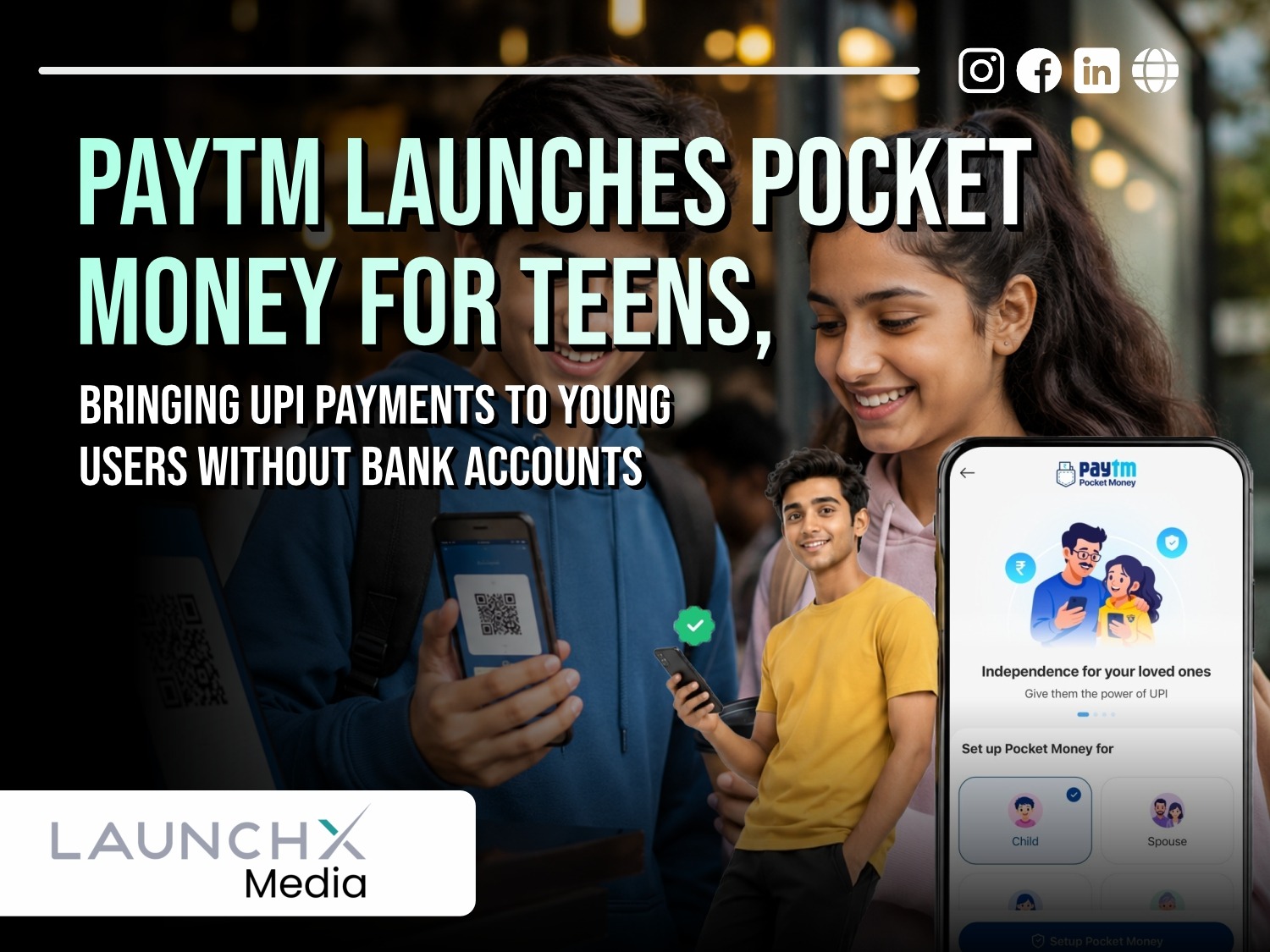

Paytm Launches Pocket Money for Teens, Bringing UPI Payments to Young Users Without Bank Accounts
Paytm Pocket Money Launches Powerful Teen UPI Feature Without Bank Account in 2026
India’s digital payment revolution is entering a new phase, and this time, teenagers are at the center of the transformation. Paytm has introduced “Pocket Money,” a new feature that allows teens to make UPI payments without requiring their own bank accounts.
The launch reflects how fintech companies are increasingly targeting younger audiences who are already deeply connected to smartphones, online shopping, gaming, food delivery apps, and digital lifestyles.
By introducing a controlled digital payment experience for teenagers, Paytm is not only expanding its user ecosystem but also helping shape the future of financial literacy and digital money management among India’s youth.
As UPI continues dominating India’s payment landscape, products designed specifically for younger users could become one of the next major growth segments in fintech.

Why Paytm’s Teen-Focused UPI Feature Matters
For years, digital payment systems in India have primarily focused on adults with active bank accounts. Teenagers often relied on cash, prepaid wallets managed by parents, or informal money-sharing methods.
However, the behavior of young consumers has changed dramatically.
Today’s teenagers are:
- Ordering food online
- Purchasing digital subscriptions
- Paying for transportation
- Shopping through e-commerce apps
- Splitting expenses with friends
- Buying educational services online
- Participating in gaming ecosystems
Despite this growing digital engagement, many teenagers still lack independent access to formal banking systems.
Paytm’s Pocket Money feature attempts to bridge that gap by creating a supervised digital payment experience tailored for younger users.
Understanding How Pocket Money Works
The feature allows parents or guardians to manage and monitor a teenager’s digital spending without requiring the teen to open a separate bank account.
This creates a controlled ecosystem where young users can experience digital payments while parents maintain oversight and financial control.
The system is expected to include features such as:
- Parent-approved onboarding
- Spending limits
- Controlled fund transfers
- UPI payment access
- Transaction monitoring
- Safe payment environments
The approach balances financial independence with parental supervision, which is especially important for younger users entering digital finance ecosystems for the first time.
India’s UPI Boom Is Expanding Beyond Adults
India’s Unified Payments Interface (UPI) has become one of the world’s largest real-time payment systems.
Over the past few years, UPI has transformed how Indians:
- Shop
- Transfer money
- Pay bills
- Order services
- Conduct business transactions
The next stage of growth may increasingly involve younger demographics.
Teenagers today are digital-first consumers. Many already understand app ecosystems, QR codes, digital wallets, and online transactions better than previous generations.
Fintech platforms are recognizing this behavioral shift and building products that align with younger users’ lifestyles.
By targeting teens early, fintech companies can potentially create long-term customer relationships that continue into adulthood.
Why Financial Literacy for Teenagers Is Becoming Important
One of the most interesting aspects of Paytm’s Pocket Money initiative is its potential impact on financial education.
Traditional financial literacy education in many households and schools remains limited. However, digital payment tools can help young users learn practical money management skills in real-world environments.
Teenagers can gradually understand concepts such as:
- Budgeting
- Spending discipline
- Saving habits
- Transaction tracking
- Responsible digital payments
- Financial decision-making
Exposure to digital finance at an early age may help build stronger financial awareness over time.
As India moves toward a more cashless economy, understanding digital financial systems is becoming an essential life skill.
Fintech Companies Are Competing for the Next Generation of Users
The fintech industry has become highly competitive.
Payment companies, neobanks, and financial apps are continuously searching for new user segments and engagement opportunities.
Teen-focused financial products are emerging as a promising category because younger users represent future long-term customers.
Several trends are driving this shift:
Smartphone Penetration Among Youth
Teenagers today have widespread access to smartphones and internet connectivity.
Digital Consumption Growth
Young consumers increasingly spend on digital entertainment, gaming, subscriptions, and e-commerce.
Family-Controlled Spending Ecosystems
Parents are becoming more comfortable with monitored digital financial tools.
Early Brand Loyalty
Companies that onboard users at younger ages may benefit from stronger long-term customer retention.
This makes teen fintech products strategically important for digital payment companies.
The Growing Market for Youth-Focused Fintech
Globally, fintech companies are exploring products built specifically for younger users.
These include:
- Teen payment cards
- Supervised digital wallets
- Student banking platforms
- Financial education apps
- Family finance ecosystems
India’s massive youth population makes this segment especially attractive.
The country has one of the largest populations of digitally connected young users globally, creating enormous potential for youth-oriented fintech innovation.
Paytm’s latest move may encourage more companies to enter this category in the coming years.
Potential Benefits of Pocket Money for Parents
While the feature is designed for teenagers, parents are also an important part of the ecosystem.
Many parents struggle with:
- Managing cash allowances
- Tracking spending
- Teaching financial discipline
- Monitoring online purchases
Digital supervision tools can simplify these challenges.
Possible advantages for parents include:
Better Spending Visibility
Parents may gain real-time insights into where and how money is being used.
Controlled Financial Independence
Teenagers can make independent payments within predefined limits.
Reduced Cash Dependency
Families can rely less on physical cash handling.
Financial Education Opportunities
Parents can use digital transactions to teach budgeting and responsible spending.

Challenges and Concerns Around Teen Digital Payments
Despite the opportunities, youth-focused digital finance products also raise important concerns.
Screen Time and Impulsive Spending
Easy digital transactions may increase impulsive purchasing behavior among young users.
Cybersecurity Risks
Teenagers may be more vulnerable to scams, phishing, or fraudulent payment requests.
Data Privacy
Handling minors’ financial data requires strong security and privacy protections.
Financial Overdependence on Apps
There are concerns about excessive reliance on digital ecosystems for everyday activities.
Fintech companies must ensure strong safeguards, parental controls, and educational support systems.
India’s Digital Payment Ecosystem Continues to Evolve
India has become one of the world’s most advanced digital payment markets.
Several factors have contributed to this transformation:
- Affordable internet access
- Smartphone growth
- Government-backed digital initiatives
- QR code adoption
- Expanding fintech infrastructure
- Merchant acceptance growth
UPI has played a central role in accelerating cashless transactions across urban and rural India.
Products like Pocket Money demonstrate how payment platforms are now evolving beyond basic transactions toward personalized user experiences.
How Teen Fintech Could Shape the Future of Banking
Teen-focused fintech solutions may eventually influence the broader financial industry.
Future innovations could include:
- AI-driven spending insights for students
- Gamified financial education
- Youth savings ecosystems
- Student investment products
- Digital allowance management
- Family finance dashboards
The line between banking, education, and digital lifestyle services is becoming increasingly blurred.
Companies that successfully combine financial utility with user-friendly experiences may dominate the next generation of fintech adoption.
Why Simplicity and Accessibility Matter
One reason UPI became so successful in India is simplicity.
Consumers prefer fast, intuitive, and low-friction payment systems.
Teenagers, especially, expect:
- Easy onboarding
- Simple interfaces
- Instant transactions
- Mobile-first experiences
Paytm’s Pocket Money feature aligns with these expectations by reducing barriers to entry for young users who may not yet have formal banking access.
The easier digital finance becomes, the faster adoption can scale.
The Bigger Picture Behind Paytm’s Strategy
Beyond the product itself, the launch reflects a larger strategic direction.
Fintech companies are no longer just payment processors. They are evolving into ecosystem platforms covering:
- Payments
- Commerce
- Credit
- Insurance
- Wealth management
- Financial education
- Lifestyle services
Youth onboarding could become an important long-term growth strategy for fintech platforms aiming to increase customer lifetime value.
By introducing teenagers to digital finance early, companies can potentially create deeply integrated future customer relationships.
A New Era of Financial Inclusion for Young India
Paytm’s Pocket Money initiative represents more than just another app feature.
It signals the beginning of a broader shift toward age-inclusive digital finance ecosystems in India.
As teenagers become more active participants in digital commerce, fintech companies will continue developing products tailored to younger audiences.
The future of India’s fintech ecosystem may not only depend on advanced technologies like AI and blockchain, but also on how effectively platforms can make financial systems accessible, educational, and user-friendly for the next generation.

FAQs
- What is Paytm Pocket Money?
Paytm Pocket Money is a feature that allows teenagers to make UPI payments without needing their own bank accounts.
- Who can use the Pocket Money feature?
The feature is designed primarily for teenagers under parental supervision.
- Does a teen need a bank account to use it?
No, the system allows controlled UPI access without requiring a separate bank account for the teen.
- Why did Paytm launch this feature?
Paytm aims to expand digital payment access while promoting financial literacy among younger users.
- How can parents monitor spending?
Parents are expected to receive transaction visibility and spending control features.
- What are the benefits for teenagers?
Teens can learn digital money management, budgeting, and responsible spending habits.
- Is the feature safe for young users?
The platform is designed with parental supervision and controlled payment systems for safer usage.
- Why are fintech companies targeting teenagers?
Teenagers represent a large future customer base with growing digital engagement.
- What challenges exist in teen digital payments?
Cybersecurity, impulsive spending, privacy concerns, and digital dependency remain key challenges.
- What is the future of youth-focused fintech in India?
The sector may expand into digital banking, savings, investments, financial education, and AI-powered finance tools.


