

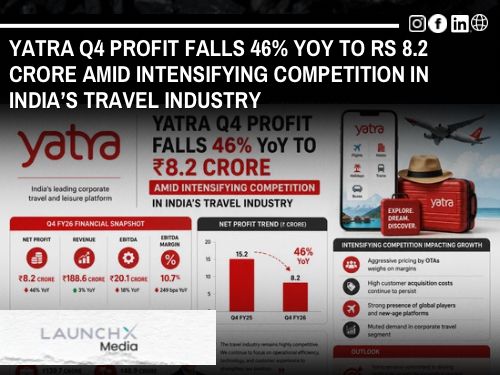

Yatra Q4 Profit Falls 46% YoY to Rs 8.2 Crore Amid Intensifying Competition in India’s Travel Industry
Yatra Q4 Profit Falls 46% YoY to Rs 8.2 Crore Amid Rising Competition in Online Travel
India’s Online Travel Industry Continues to Evolve Rapidly
Yatra has reported a significant decline in its Q4 profit for FY26, with net profit falling nearly 46% year-on-year to Rs 8.2 crore. While India’s travel and tourism sector continues witnessing strong demand recovery, the financial results highlight the growing challenges online travel companies face in balancing expansion, profitability, and competitive pressures.
- Yatra Q4 Profit Falls 46% YoY to Rs 8.2 Crore Amid Rising Competition in Online Travel
- India’s Online Travel Industry Continues to Evolve Rapidly
- Travel Demand Has Rebounded Sharply
- Revenue Growth Alone Is Not Enough
- Discounting Strategies Reduce Profitability
- Business Travel Is Recovering
- Travelers Want Personalized Experiences
- AI and Automation Are Reshaping Travel Platforms
- Domestic Tourism Is Growing Rapidly
- Multiple Platforms Are Fighting for Market Share
- Operational Costs Continue Rising
- The Sector Has High Growth Potential
- AI May Revolutionize Booking Experiences
- Government Infrastructure Investments Help Tourism
- Price Wars Could Continue
- Travel Tech Could Continue Growing Strongly
- The Travel Market Is Growing, but Competition Is Tough
- 1. What is Yatra?
- 2. How much did Yatra’s Q4 profit decline?
- 3. What was Yatra’s reported Q4 profit?
- 4. Why are online travel companies facing pressure?
- 5. What is an OTA?
- 6. Why is India’s travel industry growing?
- 7. How are travel companies using AI?
- 8. What challenges does the travel-tech industry face?
- 9. Why is corporate travel important?
- 10. Could India’s travel-tech market continue expanding?
The latest numbers reflect a changing landscape in India’s digital travel ecosystem, where companies are investing aggressively in customer acquisition, technology upgrades, and service expansion to maintain market share.
Although travel demand remains strong due to rising tourism activity, business travel recovery, and increasing digital adoption, profitability in the sector has become increasingly complex. Higher marketing costs, pricing competition, and operational spending are impacting margins across the online travel industry.
Yatra’s latest financial performance demonstrates how even established travel platforms must continuously adapt to survive in a rapidly changing digital economy.

India’s Travel Industry Is Experiencing Strong Growth
Travel Demand Has Rebounded Sharply
India’s travel sector has witnessed substantial recovery due to:
- rising domestic tourism
- increasing airline capacity
- growing middle-class spending
- international travel demand
- digital booking adoption
Consumers are traveling more frequently for:
- leisure
- work
- religious tourism
- family events
- short weekend trips
Digital Platforms Are Driving Convenience
Online travel platforms have simplified:
- flight bookings
- hotel reservations
- vacation packages
- bus ticketing
- corporate travel management
Consumers increasingly prefer digital-first travel experiences.
Why Yatra’s Profit Decline Matters
Revenue Growth Alone Is Not Enough
In today’s startup and technology ecosystem, companies are expected to demonstrate:
- sustainable growth
- operational efficiency
- strong margins
- long-term profitability
Profit decline despite sector growth suggests increasing cost pressures.
Competition Is Intensifying Across Travel Platforms
India’s online travel industry includes:
- major OTAs
- airline booking platforms
- hotel aggregators
- super apps
- fintech-integrated travel services
Competition for customers is becoming more aggressive.
Online Travel Agencies Face Margin Pressure
Discounting Strategies Reduce Profitability
Online travel companies frequently offer:
- cashback offers
- promotional discounts
- loyalty rewards
- bundled travel deals
to attract users and improve retention.
While these strategies increase bookings, they may also reduce profit margins.
Customer Acquisition Costs Are Rising
Digital advertising costs continue increasing across:
- Google search
- social media platforms
- influencer marketing
- app installs
Travel companies now spend heavily to maintain visibility and customer engagement.
Corporate Travel Is Becoming a Key Revenue Driver
Business Travel Is Recovering
Corporate travel demand is improving as:
- conferences return
- business meetings increase
- companies expand operations
- hybrid work stabilizes
Corporate travel management remains an important segment for travel companies.
Enterprise Clients Provide Recurring Revenue
Corporate customers often generate:
- repeat bookings
- long-term contracts
- stable transaction volumes
This makes enterprise travel solutions strategically important.
Consumer Travel Behavior Is Changing
Travelers Want Personalized Experiences
Modern travelers increasingly look for:
- customized travel plans
- seamless booking experiences
- flexible cancellations
- mobile-first services
Technology is becoming central to customer satisfaction.
Mobile Bookings Are Dominating
Consumers now book travel primarily through:
- mobile apps
- digital wallets
- online platforms
This shift requires constant investment in:
- app performance
- UI/UX design
- digital payment systems
Travel Tech Companies Are Investing Heavily in Technology
AI and Automation Are Reshaping Travel Platforms
Travel companies increasingly use:
- AI-powered recommendations
- predictive pricing
- chatbot support
- automated itinerary systems
to improve customer experiences.
Data Analytics Improves User Engagement
Digital travel platforms analyze:
- booking behavior
- destination preferences
- seasonal demand patterns
to optimize pricing and offers.
India’s Tourism Sector Has Long-Term Potential
Domestic Tourism Is Growing Rapidly
India’s large population and rising income levels continue supporting:
- regional tourism
- luxury travel
- adventure tourism
- wellness travel
Domestic travel demand remains a strong industry driver.
International Travel Is Also Expanding
Outbound international travel is rising due to:
- easier visa access
- increasing disposable income
- global connectivity
Travel companies are expanding international offerings accordingly.
The Online Travel Industry Is Becoming Highly Competitive
Multiple Platforms Are Fighting for Market Share
Travel companies compete across:
- pricing
- convenience
- rewards programs
- customer service
- exclusive deals
Differentiation is becoming increasingly difficult.
Super Apps Are Entering the Travel Market
Several fintech and commerce platforms now integrate:
- ticket booking
- hotel reservations
- travel insurance
- forex services
This increases competition for traditional OTAs.
Profitability Challenges in Travel Tech
Operational Costs Continue Rising
Travel platforms face increasing costs related to:
- technology infrastructure
- customer support
- compliance
- marketing campaigns
Maintaining profitability requires operational discipline.
Market Cycles Affect Travel Demand
Travel demand can fluctuate due to:
- economic slowdowns
- fuel price increases
- geopolitical uncertainty
- seasonal patterns
Travel businesses remain vulnerable to external factors.
Why Investors Closely Watch Travel Companies
The Sector Has High Growth Potential
India’s travel industry offers:
- massive digital adoption opportunities
- growing consumer demand
- expanding tourism infrastructure
This attracts investor attention.
But Profitability Remains Crucial
Investors increasingly prioritize:
- earnings quality
- operating margins
- sustainable growth
rather than only gross booking volumes.
Technology Could Shape the Future of Travel
AI May Revolutionize Booking Experiences
Future travel platforms may offer:
- AI-generated itineraries
- voice-based booking
- hyper-personalized recommendations
- predictive travel planning
Technology will likely become a major differentiator.
Automation Could Improve Efficiency
Travel companies may increasingly automate:
- customer support
- booking workflows
- refund processing
- dynamic pricing
to improve operational efficiency.
India’s Travel Economy Is Expanding
Government Infrastructure Investments Help Tourism
Improved:
- airports
- highways
- rail connectivity
- tourism infrastructure
are boosting travel activity nationwide.
Tier-2 and Tier-3 Cities Are Emerging Markets
Travel demand is expanding beyond metro cities as digital adoption grows across smaller regions.
This creates new opportunities for online travel platforms.

Challenges Ahead for Travel Platforms
Price Wars Could Continue
Heavy competition may lead to:
- lower margins
- aggressive discounting
- increased marketing expenses
Companies must balance growth with profitability.
Customer Loyalty Is Difficult to Maintain
Travel consumers often compare prices across multiple platforms before booking.
Retaining users requires:
- strong customer experiences
- loyalty benefits
- reliable support systems
The Future of Online Travel in India
Travel Tech Could Continue Growing Strongly
India’s growing middle class and increasing internet penetration support long-term travel demand.
Digital travel bookings are expected to expand significantly over the coming years.
Companies Must Focus on Sustainable Growth
Future winners in the travel-tech industry may be businesses capable of combining:
- technology innovation
- customer trust
- operational efficiency
- profitability
Why Yatra’s Results Reflect Broader Industry Trends
The Travel Market Is Growing, but Competition Is Tough
Yatra’s declining profit despite strong travel demand shows that:
- scaling profitably is difficult
- customer acquisition costs are rising
- operational efficiency is critical
The online travel sector remains highly dynamic.
Mature Platforms Must Continue Innovating
Established travel brands must continuously invest in:
- digital transformation
- AI integration
- customer personalization
- ecosystem expansion
to remain competitive.
Final Thoughts
Yatra’s Q4 FY26 results, with profit falling 46% year-on-year to Rs 8.2 crore, highlight the growing complexity of India’s rapidly evolving online travel industry. While travel demand continues strengthening across both leisure and corporate segments, maintaining profitability amid intense competition and rising operational costs remains challenging.
India’s travel-tech ecosystem still holds massive long-term growth potential driven by digital adoption, rising tourism demand, and expanding infrastructure. However, companies operating in this space will need to focus increasingly on efficiency, customer retention, and technology-driven innovation to sustain profitability in the years ahead.
As the online travel market matures, the ability to balance aggressive expansion with financial discipline may ultimately determine industry leaders.

5. FAQs (10)
1. What is Yatra?
Yatra is an online travel platform offering flight, hotel, and holiday booking services.
2. How much did Yatra’s Q4 profit decline?
Its Q4 profit declined by around 46% year-on-year.
3. What was Yatra’s reported Q4 profit?
The company reported a profit of Rs 8.2 crore.
4. Why are online travel companies facing pressure?
Rising competition, marketing costs, and discounting impact profitability.
5. What is an OTA?
OTA stands for Online Travel Agency.
6. Why is India’s travel industry growing?
Increasing tourism, digital adoption, and rising income levels are driving growth.
7. How are travel companies using AI?
AI helps improve recommendations, pricing optimization, and customer support.
8. What challenges does the travel-tech industry face?
Price wars, fluctuating demand, and customer acquisition costs are major challenges.
9. Why is corporate travel important?
Corporate clients provide recurring bookings and stable revenue streams.
10. Could India’s travel-tech market continue expanding?
Yes, growing internet penetration and rising travel demand support long-term growth.


