

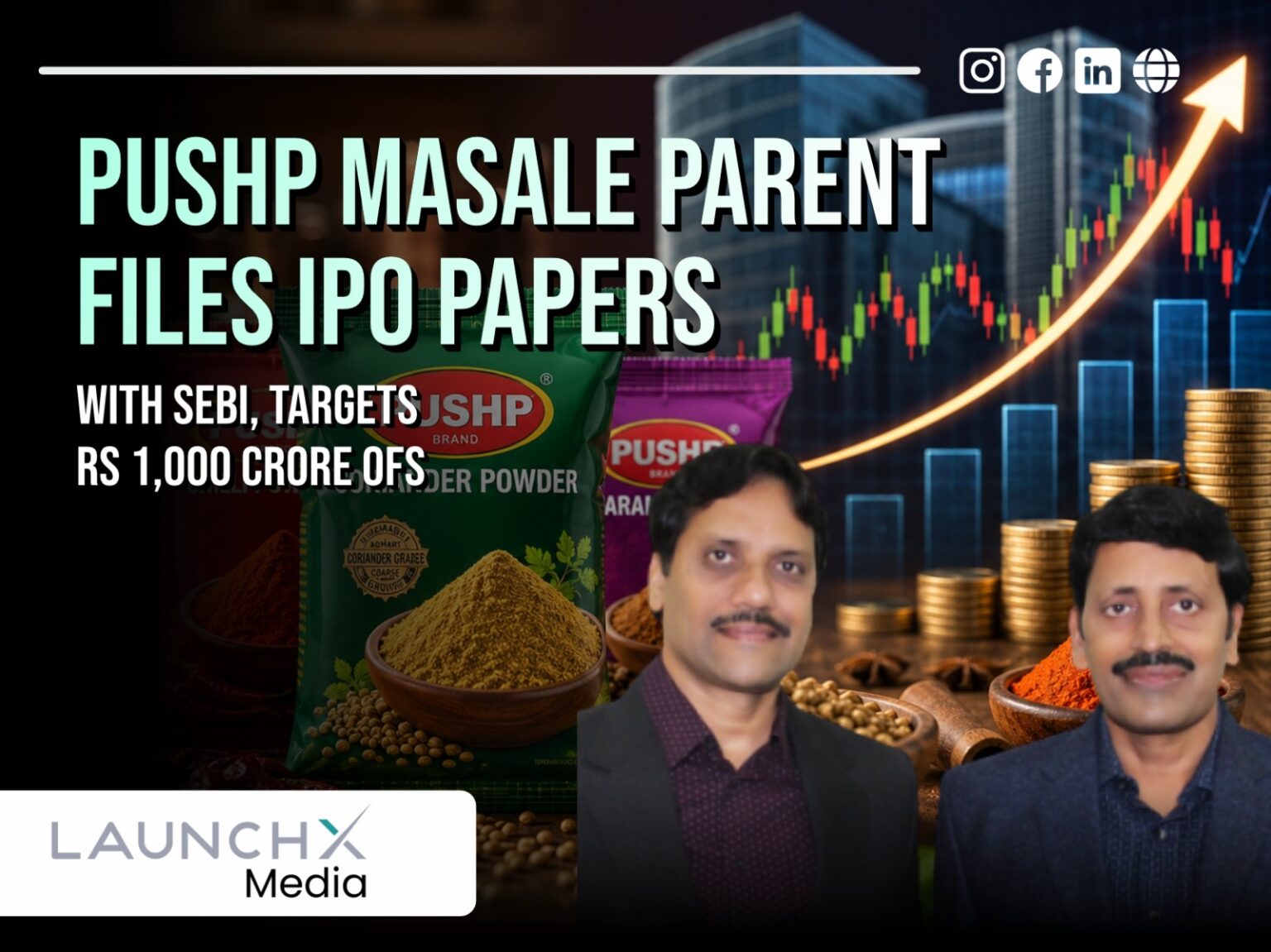

Pushp Masale Parent Files IPO Papers With SEBI, Targets Rs 1,000 Crore OFS
Pushp Masale Parent Files Powerful IPO Papers With SEBI for Rs 1000 Crore OFS
India’s fast-growing FMCG and packaged food industry is witnessing another major public market development as the parent company of Pushp Masale has officially filed draft IPO papers with SEBI, aiming for a Rs 1,000 crore offer for sale (OFS).
The move highlights the increasing investor appetite for established consumer brands operating in India’s rapidly expanding packaged food and spices market. As consumer demand shifts toward branded, hygienic, and packaged food products, companies in the spices and food processing sector are gaining stronger visibility in both private and public capital markets.
The IPO filing also reflects how India’s traditional food categories are evolving into modern, scalable consumer businesses backed by organized manufacturing, distribution networks, branding, and retail expansion.
For Pushp Masale, the public market journey could mark a significant milestone in strengthening its national brand presence and long-term growth ambitions.
Understanding Pushp Masale and Its Market Position
Pushp Masale operates in the branded spices and packaged food segment, one of India’s most competitive and culturally significant FMCG categories.
India has historically been one of the world’s largest producers and consumers of spices, making the market highly dynamic and deeply integrated into everyday household consumption.

Core Product Categories in the Spice Industry
The company operates across multiple product segments including:
- Blended spices
- Pure spices
- Regional masala mixes
- Packaged food ingredients
- Kitchen essentials
Branded spice companies focus heavily on:
- Quality consistency
- Taste standardization
- Packaging
- Distribution reach
- Consumer trust
What the IPO Filing Means
Filing IPO papers with SEBI is a major step toward entering the public markets.
What Is an IPO?
An IPO, or Initial Public Offering, allows a private company to become publicly listed by offering shares to investors.
Public listing helps companies:
- Improve brand visibility
- Access capital markets
- Enhance corporate credibility
- Create liquidity opportunities for investors
Understanding the Rs 1,000 Crore OFS
The IPO reportedly includes an Offer for Sale (OFS).
In an OFS:
- Existing shareholders sell part of their stake
- The company itself may not directly receive fresh capital from the sale
- Investors gain an opportunity to participate in ownership
OFS-based IPOs are common among mature businesses seeking public market participation.
Why FMCG and Food Brands Are Attracting Investors
India’s consumer economy continues to expand rapidly, especially in essential household categories.
Key Reasons FMCG Companies Are Growing
Daily Consumption Demand
Food and spices remain recurring consumer purchases.
Brand Loyalty
Consumers often stay loyal to trusted food brands.
Expanding Retail Penetration
Modern retail and e-commerce platforms have improved product reach.
Rising Urbanization
Urban consumers increasingly prefer packaged and branded food products.
India’s Branded Spice Market Is Expanding Rapidly
The Indian spice industry has evolved significantly over the past decade.
Earlier Market Structure
Traditionally, consumers purchased:
- Loose spices
- Locally ground masalas
- Unorganized products
Shift Toward Organized Brands
Consumers now increasingly prefer:
- Hygienic packaging
- Consistent quality
- Certified products
- Trusted brands
This shift has accelerated growth for organized spice manufacturers.
Why Branding Matters in the Spice Industry
In highly competitive FMCG categories, branding plays a major role.
Key Drivers of Brand Success
Consumer Trust
Food products require strong quality assurance.
Regional Taste Preferences
Indian cuisine varies significantly across states and regions.
Packaging Innovation
Modern packaging improves:
- Shelf life
- Convenience
- Product appeal
Distribution Strength
Availability across retail channels is critical.
India’s FMCG Sector Is Becoming a Public Market Favorite
Over the past few years, investors have increasingly shown interest in:
- Consumer brands
- Food companies
- Packaged goods businesses
- Daily-use product categories
Why Investors Like FMCG Businesses
Predictable Demand
Essential products often maintain stable demand even during economic fluctuations.
Scalability
Consumer brands can expand geographically over time.
Long-Term Consumption Growth
India’s growing middle class supports rising FMCG demand.
The Importance of SEBI in IPO Regulation
SEBI plays a critical role in regulating India’s capital markets.
What SEBI Does
SEBI oversees:
- IPO approvals
- Investor protection
- Disclosure requirements
- Corporate governance standards
Companies filing IPO papers must meet regulatory compliance requirements before listing.
The Evolution of India’s Packaged Food Industry
India’s food processing and packaged food sectors are undergoing major transformation.
Key Growth Drivers
Rising Disposable Income
Consumers are spending more on convenience-focused products.
Urban Lifestyle Changes
Busy lifestyles are increasing demand for packaged food solutions.
Organized Retail Expansion
Supermarkets and online grocery platforms support branded product growth.
Digital Commerce
E-commerce has expanded access to regional and national brands.
Competition in India’s Spice Industry
The market remains highly competitive.
Companies compete across:
- Pricing
- Taste profiles
- Regional preferences
- Packaging
- Retail presence
Organized vs Unorganized Players
While organized brands are growing, local and regional players still maintain strong market presence in many regions.
Why Food Brands Are Pursuing IPOs
Public market listings provide several strategic advantages.
Benefits of IPOs for Consumer Brands
Increased Brand Visibility
Publicly listed companies often gain stronger consumer trust.
Expansion Opportunities
Capital market participation can support future growth plans.
Improved Corporate Governance
Public companies typically operate with greater transparency.
Investor Participation
Retail and institutional investors gain access to growing businesses.
The Role of Distribution in FMCG Success
Distribution remains one of the most important competitive advantages in India’s FMCG industry.
Strong Distribution Networks Enable
- Wider product availability
- Faster market penetration
- Rural expansion
- Retail dominance
Companies with strong supply chains often scale more effectively.
Technology Is Transforming FMCG Businesses
Modern FMCG companies increasingly use technology for:
- Supply chain management
- Consumer analytics
- Inventory optimization
- Digital marketing
- Demand forecasting
Data-Driven Consumer Insights
Brands now rely heavily on data to understand:
- Consumer behavior
- Regional preferences
- Purchase patterns
The Growing Importance of Regional Brands
India’s diversity creates opportunities for regional food brands to scale nationally.
Why Regional Brands Succeed
Strong Local Identity
Consumers connect emotionally with familiar flavors.
Authentic Taste Positioning
Regional authenticity often drives loyalty.
Cultural Relevance
Food preferences remain deeply tied to local traditions.

Challenges Facing FMCG and Spice Companies
Despite strong opportunities, the sector also faces operational challenges.
Raw Material Price Volatility
Spice prices can fluctuate due to:
- Weather conditions
- Agricultural output
- Supply chain disruptions
Intense Competition
Both organized and local players compete aggressively.
Distribution Costs
Building national retail reach requires significant investment.
Consumer Preference Shifts
Brands must continuously innovate to remain relevant.
India’s Consumer Economy Is Expanding
India’s rising middle class continues driving growth in packaged food consumption.
Key Consumption Trends
Health and Hygiene Awareness
Consumers increasingly prioritize packaged and quality-certified products.
Convenience Consumption
Ready-to-use food products are becoming more popular.
Brand Consciousness
Younger consumers increasingly prefer branded FMCG products.
Future Growth Opportunities for Pushp Masale
The company appears positioned to capitalize on several long-term trends.
Geographic Expansion
Expansion into new states and markets could drive growth.
Product Diversification
Food brands often expand into:
- Ready mixes
- Packaged foods
- Instant cooking products
E-Commerce Growth
Digital grocery platforms continue creating new sales opportunities.
Export Potential
Indian spice brands may benefit from rising global demand for Indian cuisine.
IPO Activity Reflects Startup and Business Maturity
The growing number of IPO filings in India reflects the maturity of the broader business ecosystem.
Public Markets Are Becoming More Accessible
More Indian companies now view IPOs as:
- Growth opportunities
- Brand-building milestones
- Liquidity events
This trend supports the development of India’s capital markets.
What This Means for India’s FMCG Industry
Pushp Masale’s IPO filing highlights broader shifts in India’s food and consumer goods ecosystem.
Major Industry Trends Emerging
Organized Food Brands Are Growing
Consumers increasingly prefer trusted packaged products.
Regional Brands Are Scaling Nationally
Technology and retail expansion are enabling broader market access.
Investor Confidence in Consumer Businesses Is Rising
Consumer-focused businesses remain attractive investment opportunities.
Final Thoughts
Pushp Masale’s parent company filing IPO papers with SEBI for a Rs 1,000 crore OFS marks another important development in India’s growing FMCG and packaged food sector. The move reflects increasing investor confidence in established consumer brands operating in essential product categories with long-term demand potential.
As India’s consumer economy continues expanding, organized food and spice companies may benefit from rising brand consciousness, urbanization, retail modernization, and digital commerce growth.
For Pushp Masale, the IPO process could strengthen its market visibility and position the company for future expansion opportunities within India’s highly competitive packaged food landscape.
More broadly, the development highlights how traditional Indian industries are increasingly evolving into modern, scalable businesses capable of attracting public market participation and long-term investor interest.

FAQs
- What is Pushp Masale?
Pushp Masale is an Indian branded spices and packaged food company.
- What is the latest development regarding Pushp Masale?
Its parent company has filed IPO papers with SEBI.
- What is the size of the proposed IPO?
The IPO reportedly targets a Rs 1,000 crore Offer for Sale (OFS).
- What does OFS mean in an IPO?
OFS stands for Offer for Sale, where existing shareholders sell shares to public investors.
- Why are FMCG companies attractive to investors?
FMCG businesses benefit from recurring consumer demand and scalable growth opportunities.
- Why is India’s branded spice market growing?
Growth is driven by rising demand for hygienic, packaged, and trusted food products.
- What role does SEBI play in IPOs?
SEBI regulates IPO approvals, disclosures, and investor protection in India’s capital markets.
- What challenges do spice companies face?
Challenges include raw material volatility, competition, and distribution costs.
- How is e-commerce helping food brands?
Online grocery platforms improve market access and customer reach.
- What is the future outlook for India’s packaged food industry?
The industry is expected to grow steadily due to urbanization, rising incomes, and changing consumer preferences.


