

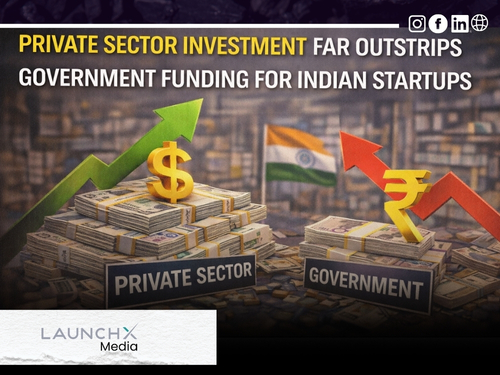

Private Sector Investment Far Outstrips Government Funding for Indian Startups
Startup Funding India Soars: Private Investors Back Startups 3.8x More Than Govt
In a striking development for the Indian startup ecosystem, new data shows that startups received nearly 3.8 times more funding from private sector investors than from government schemes over the latest reporting period. This trend reflects a maturing market where private capital, venture capital firms, and strategic investors are playing an increasingly central role in fueling innovation and growth.
- Startup Funding India Soars: Private Investors Back Startups 3.8x More Than Govt
- A Breakdown of Where the Money Is Coming From
- Why Private Capital Is Dominating the Startup Funding Scene
- Government Schemes Still Play a Strategic Role
- What This Data Means for the Startup Ecosystem
- Sectoral Trends: Where Investment Is Concentrated
- Balancing Private and Public Funding: The Road Ahead
- FAQs (10)
The figures, released by the Department for Promotion of Industry and Internal Trade (DPIIT), highlight how private investment dominates the funding landscape compared to public sector schemes aimed at supporting startups.

A Breakdown of Where the Money Is Coming From
According to the DPIIT data, while government schemes such as the Startup India Seed Fund Scheme (SISFS), credit guarantee initiatives, and other support mechanisms have helped early-stage startups, the bulk of funding is flowing from private investors.
Key contributors include:
Venture Capital (VC) funds
Angel investors
Private Equity firms
Corporate venture capital units
In contrast, government funding — though an important support structure — accounted for a much smaller portion of total startup funding.
This gap reflects how investor confidence and risk appetite among private entities have grown significantly, especially in sectors such as fintech, healthtech, edtech, SaaS, and deeptech.

Why Private Capital Is Dominating the Startup Funding Scene
Several factors have driven private sector investment ahead of government funding:
1. Higher Risk Tolerance
Private investors — especially VCs and angel networks — tend to have a greater appetite for high-growth startups, even those with unproven business models.
2. Faster Decision-Making
Government funding schemes often involve bureaucratic review and compliance requirements that make the process slower. Private investors can execute deals more quickly, allowing startups to scale rapidly.
3. Global Capital Flow
International investors are increasingly looking at India as a high-growth market, contributing to the surge in private investment.
4. Ecosystem Maturity
India’s startup sector has produced several unicorns and global success stories, which boosts investor confidence and attracts more capital.
Government Schemes Still Play a Strategic Role
While private funding leads in sheer volume, government schemes are not irrelevant. Initiatives like the Startup India Seed Fund Scheme, credit guarantees through CGTMSE, and sector-specific incentives help startups at crucial early stages — especially those that might struggle to attract private capital quickly.
These programs provide:
Seed capital for pre-revenue startups
Support for technology development and prototyping
Credit support for small businesses
For deeply technical startups or those in nascent sectors, government funding can be a lifeline that bridges the gap until private investors show interest.
What This Data Means for the Startup Ecosystem
The nearly 4:1 ratio of private to government funding underscores a significant shift in India’s entrepreneurial landscape:
Private capital is the primary driver of scale and expansion.
Startups are becoming more investor-ready earlier in their lifecycle.
Government schemes are playing a supportive, not leading, role.
This trend is a sign of a more mature and competitive startup ecosystem, where private investors are confident in the long-term potential of Indian innovation.

Sectoral Trends: Where Investment Is Concentrated
The DPIIT report also highlights sectoral patterns in funding:
Fintech
Fintech continues to attract heavy investment due to its scalability and digital reach.
Healthtech
Health technology startups have gained traction, especially post-pandemic.
SaaS and B2B
Software-as-a-Service companies are emerging as strong performers with global customer bases.
Deeptech & AI Startups
These niche but strategic sectors are drawing investor interest for long-term value creation.
Balancing Private and Public Funding: The Road Ahead
There is growing dialogue around how to balance ambitious private funding with effective government support. Policymakers and industry stakeholders are exploring ways to:
Streamline government funding approvals
Enhance public–private partnerships
Encourage blended finance models
Increase awareness of government schemes among startups
Such measures could make government support more accessible and impactful, especially for founders who lack early access to private capital.

FAQs (10)
What does the DPIIT report say about startup funding?
Startups in India received nearly 3.8 times more funding from private investors than from government schemes.Which sectors attract the most private investment?
Fintech, healthtech, SaaS, and deeptech are among the top sectors.What are some key government funding schemes?
Startup India Seed Fund Scheme, CGTMSE, and other innovation incentives.Why does private funding outweigh government funding?
Private investors often have higher risk tolerance, faster decision cycles, and global capital access.Is government funding still important?
Yes — especially for early-stage startups and sectors with high development costs.Do government schemes help all startups?
They mainly support early-stage and tech-driven startups that might not immediately attract private capital.What role do angel investors play?
Angel investors provide early capital and mentorship, often before larger VC funds enter.How does this trend impact new entrepreneurs?
New founders may find it easier to access private capital but still benefit from government support at early stages.Are international investors active in India?
Yes, many international VCs are investing in Indian startups.What is the future of startup funding in India?
A mix of private, government, and blended finance models as the ecosystem continues to evolve.


