

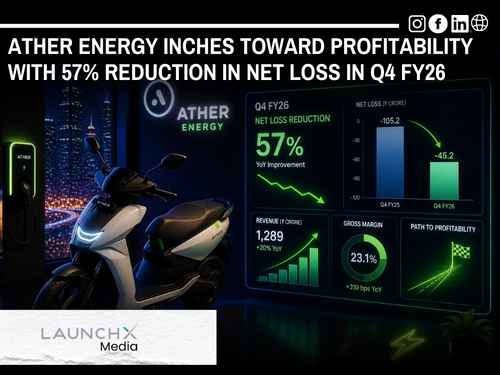

Ather Energy Inches Toward Profitability with 57% Reduction in Net Loss in Q4 FY26
Ather Energy Financial Turnaround: Net Loss Shrinks to ₹100 Crore in Q4 FY26
India’s electric vehicle (EV) revolution is accelerating rapidly, and one of its most prominent players, Ather Energy, is now making headlines for a significant financial turnaround. In Q4 FY26, the Bengaluru-based EV startup reported a remarkable 57% reduction in its net loss, bringing it down to approximately ₹100 crore.
This development is more than just a financial update—it reflects a broader shift in India’s EV ecosystem, where startups are now transitioning from aggressive expansion to sustainable growth and profitability.
Ather Energy’s Financial Performance: A Turning Point
Sharp Reduction in Losses
Ather Energy’s ability to cut its net loss by more than half in a single quarter signals improved operational efficiency and stronger business fundamentals. For years, EV startups have been burning cash to scale production, expand distribution, and build charging infrastructure. However, Ather’s latest results indicate that the company is successfully balancing growth with cost control.
This 57% drop in losses is not just a number—it reflects strategic decisions around pricing, production optimization, and supply chain management.

Revenue Growth and Market Demand
While reducing losses is critical, it is equally important to sustain revenue growth. Ather Energy has seen increasing demand for its electric scooters, driven by:
- Rising fuel prices
- Government incentives for EV adoption
- Growing environmental awareness among consumers
The company’s expanding customer base and improved product offerings have contributed significantly to its financial improvement.
What’s Driving Ather Energy’s Path to Profitability?
- Strong Product Portfolio
Ather Energy has built a reputation for premium electric scooters that combine performance, design, and technology. Its focus on quality rather than just affordability has helped it carve out a loyal customer base.
Continuous upgrades, smart features, and improved battery performance have made its scooters stand out in a competitive market.
- Cost Optimization Strategies
One of the biggest challenges for EV startups is managing production costs. Ather has taken several steps to optimize expenses:
- Localization of components
- Improved manufacturing efficiency
- Better supplier negotiations
These efforts have significantly reduced the cost per unit, contributing directly to lower losses.
- Expansion of Charging Infrastructure
Ather’s proprietary fast-charging network has been a key differentiator. By investing in charging infrastructure, the company has addressed one of the biggest barriers to EV adoption—range anxiety.
This ecosystem approach not only boosts sales but also strengthens customer trust and retention.
- Government Support and EV Policies
India’s push toward electric mobility has played a crucial role in Ather’s growth. Subsidies, tax benefits, and state-level EV policies have made electric scooters more affordable for consumers.
These policy-driven incentives have helped companies like Ather scale faster while maintaining competitive pricing.
Industry Context: EV Startups in India Are Maturing
Ather Energy’s performance reflects a broader trend in the Indian EV industry. Earlier, startups focused heavily on rapid expansion, often at the cost of profitability. Now, the focus is shifting toward sustainable business models.
Key Industry Trends
- Increased focus on unit economics
- Shift from hyper-growth to profitability
- Rising competition from both startups and legacy automakers
- Greater investor scrutiny on financial performance
This evolution marks a critical phase where only financially disciplined companies are likely to thrive.

Challenges Ahead for Ather Energy
Despite its strong progress, Ather Energy still faces several challenges on its path to profitability.
- Intense Competition
The EV market in India is becoming increasingly crowded. New entrants, along with established players, are launching competitive products at aggressive price points.
- Battery Costs and Supply Chain Risks
Battery technology remains one of the most expensive components in EV manufacturing. Fluctuations in raw material prices can impact margins significantly.
- Scaling Without Compromising Quality
As Ather expands production, maintaining product quality and customer satisfaction will be critical. Any compromise here could affect brand reputation.
Future Outlook: Can Ather Achieve Profitability Soon?
Ather Energy’s recent financial performance suggests that profitability may not be far away. If the company continues on its current trajectory, it could achieve break-even in the near future.
Growth Opportunities
- Expansion into new cities and markets
- Launch of new, more affordable models
- Advancements in battery technology
- Strategic partnerships and collaborations
The company’s ability to innovate while maintaining financial discipline will determine its long-term success.
Deeper Insights: What This Means for Investors and the EV Ecosystem
Ather Energy’s progress is a positive signal for investors who have been cautious about EV startups’ long-term viability. It demonstrates that with the right strategy, EV companies can move toward profitability without sacrificing growth.
For the broader ecosystem, this milestone reinforces confidence in India’s electric mobility transition. It shows that the market is not just growing—but maturing.

- FAQs (10)
- What is Ather Energy known for?
Ather Energy is an Indian electric vehicle startup known for manufacturing premium electric scooters and building charging infrastructure. - What was Ather Energy’s net loss in Q4 FY26?
The company reported a net loss of around ₹100 crore in Q4 FY26. - How much did Ather Energy reduce its losses?
Ather reduced its net loss by approximately 57% compared to the previous period. - Is Ather Energy profitable now?
No, but it is moving closer to profitability with improved financial performance. - What factors helped reduce Ather’s losses?
Cost optimization, increased sales, better supply chain management, and operational efficiency. - What products does Ather Energy offer?
The company primarily offers electric scooters with smart features and high performance. - How is the EV market growing in India?
The EV market is expanding rapidly due to government incentives, rising fuel costs, and environmental awareness. - What challenges does Ather Energy face?
Competition, battery costs, and scaling operations while maintaining quality. - Does Ather have its own charging network?
Yes, Ather has developed its own fast-charging infrastructure. - When can Ather Energy become profitable?
If current trends continue, the company may achieve profitability in the near future.


