

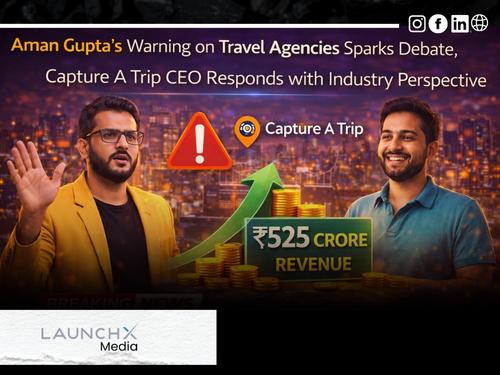

Aman Gupta’s Warning on Travel Agencies Sparks Debate, Capture A Trip CEO Responds with Industry Perspective
Aman Gupta vs Capture A Trip CEO: 7 Bold Lessons for Indias Travel Startup Industry
India’s startup ecosystem thrives not just on innovation — but on sharp debates and strong opinions.
- Aman Gupta vs Capture A Trip CEO: 7 Bold Lessons for Indias Travel Startup Industry
- The Core Issue: Can One Crisis Destroy a Travel Business?
- The Counterpoint: Legacy Players Survived Turbulence
- Reputation Risk in the Digital Era
- The Travel Startup Landscape in India
- Startup vs Legacy: Different Survival Strategies
- The Power of Crisis Management
- Trust as the Core Currency
- Lessons for Travel Entrepreneurs
- 1. Build Financial Cushion
- 2. Diversify Revenue Streams
- 3. Strengthen Customer Support
- 4. Invest in Brand Equity
- 5. Prepare for Reputation Risks
- Social Media Amplification: Double-Edged Sword
- The Bigger Picture: Startup Resilience in India
- Travel Industry Outlook
- Final Takeaway
- 1. What sparked the debate in the travel startup space?
- 2. Who responded to the remark?
- 3. What example was used in the response?
- 4. Why is trust important in travel businesses?
- 5. Can social media damage a startup?
- 6. Are travel startups riskier than other startups?
- 7. How can travel companies prepare for crises?
- 8. Do legacy brands have an advantage?
- 9. Is the travel industry growing in India?
- 10. What is the key lesson for founders?
Recently, Aman Gupta, co-founder of boAt and a well-known startup voice, made a striking remark suggesting that a single scandal can shut down a travel agency. The statement quickly sparked discussion across the startup and travel tech community.
In response, Nitin Khanna, CEO of travel platform Capture A Trip, offered a contrasting perspective, pointing out that established players like SOTC and Thomas Cook have survived industry crises without shutting down.
The exchange has opened up a larger conversation about trust, resilience, and reputation in India’s travel startup industry.
Let’s unpack what this debate really means.

The Core Issue: Can One Crisis Destroy a Travel Business?
Aman Gupta’s comment reflects a common startup fear — reputational risk.
In service-driven industries like travel, trust is everything.
Customers often:
Pay in advance
Share personal documents
Depend on agencies for visas, flights, and accommodations
Travel internationally under tight schedules
If something goes wrong, public backlash can be swift and damaging.

The Counterpoint: Legacy Players Survived Turbulence
Nitin Khanna’s response highlights an important reality: even large travel brands have faced crises — yet survived.
Established companies such as SOTC and Thomas Cook have navigated:
Global travel shutdowns
Industry financial disruptions
Consumer trust issues
Economic downturns
Despite challenges, they did not shut operations permanently.
This suggests that crisis does not automatically equal collapse.
Reputation Risk in the Digital Era
Today, startups operate in a hyper-connected world.
One viral post can:
Damage brand credibility
Trigger refund demands
Cause investor concerns
Impact new bookings
Unlike earlier decades, digital reputation spreads instantly.
This makes risk management and transparent communication essential for survival.

The Travel Startup Landscape in India
India’s travel and tourism industry is rapidly digitizing.
Modern travel startups focus on:
Customized group tours
Experience-based itineraries
Budget international travel
Social media-driven marketing
Influencer-led growth
However, the sector also faces unique vulnerabilities:
Currency fluctuations
Visa delays
Airline cancellations
Geopolitical risks
Founders must build resilience into their business models.
Startup vs Legacy: Different Survival Strategies
Legacy Travel Brands
Established supplier networks
Strong financial buffers
Diversified service portfolios
Corporate travel segments
New-Age Travel Startups
Lean operational models
Digital-first marketing
Community-driven branding
Lower fixed infrastructure
Both models have strengths — but they handle crisis differently.
The Power of Crisis Management
The real takeaway from the debate is not whether one scandal can close a company — but how a company responds.
Effective crisis management includes:
Immediate public communication
Transparent refund processes
Customer grievance resolution
Legal compliance
Media engagement
Startups that act swiftly often recover faster.

Trust as the Core Currency
In travel, customers are not just buying tickets — they’re buying experiences and security.
Trust is built through:
Consistent service delivery
Clear policies
Positive customer reviews
Strong online presence
Influencer credibility
A single incident may shake confidence, but long-term trust can provide a buffer.
Lessons for Travel Entrepreneurs
This debate offers valuable insights for startup founders:
1. Build Financial Cushion
Unexpected events can disrupt cash flow.
2. Diversify Revenue Streams
Domestic travel, international tours, corporate bookings.
3. Strengthen Customer Support
A fast response reduces escalation.
4. Invest in Brand Equity
Strong brands recover faster from setbacks.
5. Prepare for Reputation Risks
Have crisis playbooks ready.
Social Media Amplification: Double-Edged Sword
Platforms like Instagram and Twitter have helped travel startups grow rapidly.
But they also amplify:
Customer complaints
Service lapses
Operational failures
A business built through social media visibility must be prepared for social media scrutiny.
The Bigger Picture: Startup Resilience in India
India’s startup ecosystem has matured significantly.
Founders today understand:
Compliance matters
Governance matters
Reputation matters
Sustainability matters
The conversation between Aman Gupta and Nitin Khanna reflects this evolution — where public accountability and strategic resilience go hand in hand.
Travel Industry Outlook
India’s outbound and domestic travel markets continue to grow.
Key growth drivers include:
Rising middle-class income
Remote work flexibility
Youth travel trends
Affordable flight connectivity
The opportunity is strong — but so is competition.
Startups that combine agility with disciplined operations are likely to survive industry shocks.
Final Takeaway
Can one crisis shut down a travel agency? Possibly — if poorly handled.
But history shows that businesses with strong systems, transparent leadership, and resilient operations can withstand turbulence.
The debate is not about fear — it’s about preparedness.
And for travel startups in India, preparedness may be the ultimate differentiator.

FAQs
1. What sparked the debate in the travel startup space?
Aman Gupta suggested that one scandal can shut down a travel agency.
2. Who responded to the remark?
Capture A Trip CEO Nitin Khanna offered a counter perspective.
3. What example was used in the response?
Established travel brands like SOTC and Thomas Cook were referenced.
4. Why is trust important in travel businesses?
Customers often pay in advance and rely on agencies for critical arrangements.
5. Can social media damage a startup?
Yes, viral negative feedback can impact reputation quickly.
6. Are travel startups riskier than other startups?
They face unique risks like cancellations, currency volatility, and global disruptions.
7. How can travel companies prepare for crises?
Through financial planning, communication strategies, and operational resilience.
8. Do legacy brands have an advantage?
They typically have larger financial buffers and diversified operations.
9. Is the travel industry growing in India?
Yes, domestic and international travel demand is increasing.
10. What is the key lesson for founders?
Build resilience, not just rapid growth.


