

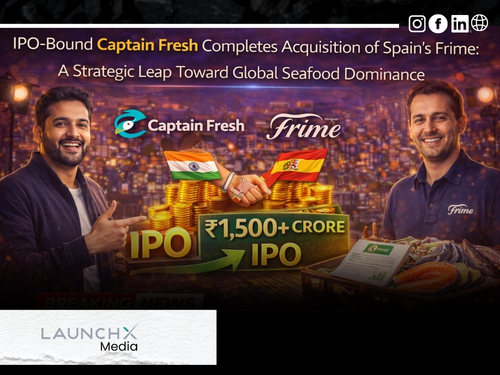

IPO-Bound Captain Fresh Completes Acquisition of Spain’s Frime: A Strategic Leap Toward Global Seafood Dominance
Captain Fresh IPO Move: 5 Massive Advantages of the Strategic Frime Acquisition
India’s B2B seafood tech startup Captain Fresh is accelerating its global ambitions.
- Captain Fresh IPO Move: 5 Massive Advantages of the Strategic Frime Acquisition
- Captain Fresh’s Global Expansion Strategy
- Why Frime Matters
- 1. Direct Entry into Europe
- 2. Processing Capabilities
- 3. Established Distribution Networks
- 4. Brand Credibility
- IPO Timing: Why Expand Before Going Public?
- The Rise of B2B Seafood Tech in India
- Building a Global Seafood Supply Chain
- Competitive Landscape
- Risks and Challenges
- What This Means for Investors
- India’s Growing Global Startup Footprint
- Sustainability and the Future of Seafood
- Final Thoughts
- 1. What acquisition did Captain Fresh complete?
- 2. Why is this acquisition important?
- 3. Is Captain Fresh planning an IPO?
- 4. What does Captain Fresh do?
- 5. How does the acquisition impact valuation?
- 6. What market does Frime operate in?
- 7. What risks come with international acquisitions?
- 8. How does technology improve seafood supply chains?
- 9. Why expand before an IPO?
- 10. What does this mean for India’s startup ecosystem?
As the company prepares for its upcoming IPO, it has successfully completed the acquisition of Spain-based seafood player Frime. The move signals a major strategic expansion into European markets and positions Captain Fresh as a stronger global contender in the seafood supply chain industry.
This isn’t just another cross-border acquisition. It’s a calculated pre-IPO move that reflects scale, ambition, and global integration.
Let’s dive deeper.

Captain Fresh’s Global Expansion Strategy
Captain Fresh has built its brand as a tech-enabled B2B seafood marketplace connecting farmers, fishermen, and global buyers. Its model focuses on digitizing procurement, quality control, and distribution.
The acquisition of Frime significantly enhances:
European market access
Cold chain infrastructure
Processing capabilities
International customer base
Supply chain depth
For a company heading toward public markets, this type of international expansion strengthens investor confidence.

Why Frime Matters
Frime is a well-established seafood processor and distributor based in Spain. Europe represents one of the largest seafood consumption markets globally.
By acquiring Frime, Captain Fresh gains:
1. Direct Entry into Europe
Instead of building from scratch, it secures an operational base in Spain.
2. Processing Capabilities
Advanced seafood processing enhances product value and margins.
3. Established Distribution Networks
Existing European customer relationships reduce market entry risk.
4. Brand Credibility
Local presence improves trust among European buyers.
This acquisition aligns perfectly with a scale-focused IPO narrative.

IPO Timing: Why Expand Before Going Public?
Pre-IPO acquisitions are often strategic.
They help:
Strengthen revenue projections
Expand global footprint
Diversify geographic risk
Enhance valuation prospects
Improve EBITDA outlook
For Captain Fresh, the Frime acquisition demonstrates operational maturity and long-term planning — key attributes public market investors look for.
The Rise of B2B Seafood Tech in India
India is one of the world’s largest seafood exporters. However, the traditional seafood supply chain has long been fragmented and inefficient.
Tech-driven platforms like Captain Fresh aim to solve issues such as:
Lack of price transparency
Supply-demand mismatches
Quality inconsistencies
Cold chain gaps
Export inefficiencies
By leveraging data analytics and digital procurement systems, the company streamlines sourcing and distribution.
The Frime deal strengthens this technology-backed supply chain internationally.
Building a Global Seafood Supply Chain
The seafood industry is highly globalized.
Fish caught in one country is often processed in another and consumed in a third.
Captain Fresh’s strategy appears focused on building:
Integrated sourcing hubs
Global processing units
Multi-country distribution channels
Standardized quality frameworks
With operations expanding beyond India, the company transitions from a domestic marketplace to a global seafood platform.
Competitive Landscape
The global seafood supply chain includes:
Traditional exporters
Regional distributors
Processing companies
Emerging tech-enabled marketplaces
By combining Indian sourcing strength with European processing and distribution, Captain Fresh may gain a cost and logistics advantage.
However, competition remains strong, especially in Europe where regulatory and quality standards are strict.
Risks and Challenges
While the acquisition strengthens global presence, integration challenges can arise.
Operational Integration
Merging processes, teams, and compliance standards across continents requires precision.
Regulatory Compliance
European food safety and sustainability regulations are stringent.
Currency Fluctuations
Cross-border operations expose the company to forex volatility.
IPO Scrutiny
Public market investors will examine integration outcomes closely.
Successfully navigating these factors will be crucial.

What This Means for Investors
For potential IPO investors, the acquisition signals:
Aggressive global expansion
Revenue diversification
Higher addressable market
Long-term scalability
However, they will also assess:
Integration efficiency
Profit margins post-acquisition
Capital allocation discipline
Debt levels, if any
Pre-IPO expansion can boost valuation — but only if execution matches ambition.
India’s Growing Global Startup Footprint
Captain Fresh’s move reflects a broader trend: Indian startups expanding internationally before listing.
This indicates:
Greater capital access
Stronger global confidence
Shift from domestic focus to global competitiveness
Maturing startup ecosystem
Indian companies are no longer just targeting local markets — they are building multinational operations.
Sustainability and the Future of Seafood
The seafood industry faces increasing pressure around sustainability.
Investors and regulators now demand:
Traceability
Ethical sourcing
Reduced environmental impact
Sustainable aquaculture practices
Technology-enabled supply chains like Captain Fresh’s can improve traceability and monitoring — a key differentiator in global markets.
If leveraged effectively, sustainability could become a competitive advantage.
Final Thoughts
Captain Fresh’s acquisition of Spain-based Frime is more than an expansion headline.
It represents:
Strategic pre-IPO positioning
Global supply chain integration
Strengthened European presence
Ambition to dominate B2B seafood trade
As the company moves closer to its IPO, this deal may play a critical role in shaping investor perception and valuation.
For India’s startup ecosystem, it’s another example of homegrown companies thinking — and operating — globally.
The road to IPO just became more international.

FAQs
1. What acquisition did Captain Fresh complete?
Captain Fresh acquired Spain-based seafood company Frime.
2. Why is this acquisition important?
It strengthens Captain Fresh’s European presence and global supply chain.
3. Is Captain Fresh planning an IPO?
Yes, the company is preparing for a public listing.
4. What does Captain Fresh do?
It operates a tech-enabled B2B seafood marketplace.
5. How does the acquisition impact valuation?
Global expansion can enhance revenue projections and investor confidence.
6. What market does Frime operate in?
Frime operates in Spain and serves European seafood markets.
7. What risks come with international acquisitions?
Integration challenges, regulatory compliance, and currency volatility.
8. How does technology improve seafood supply chains?
Through traceability, quality control, and logistics optimization.
9. Why expand before an IPO?
To demonstrate growth potential and strengthen financial outlook.
10. What does this mean for India’s startup ecosystem?
It shows Indian startups are expanding globally before listing.