

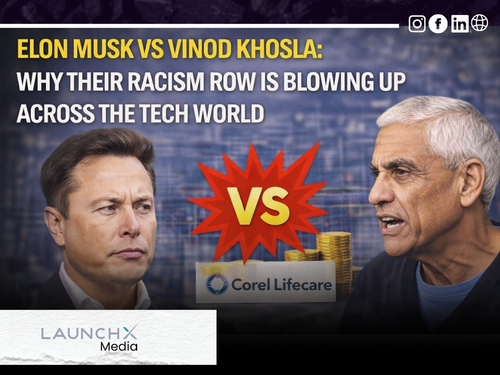

Elon Musk vs Vinod Khosla: Why Their Racism Row Is Blowing Up Across the Tech World
Elon Musk Responds to Vinod Khosla: 5 Bold Claims That Fueled the Racism Controversy
The tech world has never been short on public clashes. But when two influential names—Elon Musk and Vinod Khosla—collide in an online debate involving racism allegations, the internet doesn’t just watch… it amplifies.
- Elon Musk Responds to Vinod Khosla: 5 Bold Claims That Fueled the Racism Controversy
- What Sparked the Elon Musk vs Vinod Khosla Controversy?
- Elon Musk’s Response: The Line That Became the Headline
- The Bigger Question: Can Personal Identity Prove Someone Isn’t Racist?
- Why Vinod Khosla’s Name Adds Weight to This Fight
- Why This Story Went Viral So Fast
- 1) It Involves Big Personalities
- 2) It Touches a High-Sensitivity Topic
- 3) It’s Built for Screenshot Culture
- 4) It Feeds Into a Larger Culture War
- What This Means for Tech Leadership in 2026
- The Brand Risk: When Controversy Becomes the Product
- The Social Media Reality: Truth, Optics, and the Fight for Narrative
- Final Thoughts: A Viral Fight That Reflects a Bigger Tech Problem
- FAQs (10)
In a rapidly spreading controversy, Elon Musk responded sharply to Vinod Khosla in what many are calling a “racism row,” making a personal defense that immediately grabbed attention. The discussion quickly turned into a broader conversation about identity, public accountability, and how tech leaders handle serious allegations in the age of screenshots and viral narratives.
So what exactly happened, why did it escalate so fast, and what does this moment tell us about today’s leadership culture?
Let’s break it down—news-style, but with the deeper context most headlines skip.

What Sparked the Elon Musk vs Vinod Khosla Controversy?
Online controversies often start with a single post and then spiral into something bigger than the original topic. This case is no different.
The tension reportedly grew after Vinod Khosla made comments suggesting that Musk’s behavior and actions reflect problematic views—leading to public discussion that included racism-related criticism.
Musk didn’t let the statement pass quietly.
Instead, he responded publicly with a defensive argument that leaned heavily on his personal life, including details about his partner’s background and his son’s middle name—aiming to counter the idea that he could be racist.
The result? A full-blown viral moment, with social media split between those who saw Musk’s response as proof of unfair accusations, and others who felt the reply avoided the core issue.
Elon Musk’s Response: The Line That Became the Headline
Elon Musk’s comeback included a claim that his partner is “half Indian” and that his son’s middle name is “Sekhar.”
In his view, these details were presented as a rebuttal—suggesting that personal relationships and family identity should be enough to disprove accusations of racism.
Why This Type of Defense Creates Instant Debate
This kind of response is controversial for one main reason:
Many people believe racism isn’t only about personal relationships—it can also be reflected in public behavior, workplace culture, platform decisions, and how leaders treat communities at scale.
So while Musk’s supporters may interpret the statement as a straightforward “case closed,” critics argue that identity-based defenses don’t automatically address the broader concerns being raised.

The Bigger Question: Can Personal Identity Prove Someone Isn’t Racist?
This is where the controversy becomes more than just a celebrity argument.
Because the internet has seen this pattern before:
“I can’t be racist because I have friends/partners from that community.”
Why That Argument Often Backfires Online
Public perception has shifted. Today, audiences increasingly view racism as:
systemic, not just personal
behavioral, not just emotional
measurable in outcomes, not intentions
So when a leader uses personal connections as a defense, it can come across as:
a shortcut argument
a distraction from accountability
a way to “win” the conversation without addressing the real criticism
This doesn’t mean every accusation is correct—but it does mean the audience expects more than personal references.

Why Vinod Khosla’s Name Adds Weight to This Fight
Vinod Khosla is not just another tech personality posting online.
He’s widely recognized as a major Silicon Valley investor and a strong voice in technology, innovation, and public debate. When someone with that kind of influence challenges Musk—even indirectly—it naturally creates a bigger ripple.
This Isn’t Just a Clash of Opinions—It’s a Clash of Influence
This story matters because both individuals represent different power centers:
Musk: platform influence + mass audience + cultural visibility
Khosla: investor credibility + Silicon Valley legacy + policy-level voice
That combination turns a “tweet fight” into something that feels like a tech culture referendum.
Why This Story Went Viral So Fast
This controversy hit multiple “viral triggers” at once:
1) It Involves Big Personalities
Anything involving Elon Musk becomes instant global content—because he’s not just a CEO, he’s a brand.
2) It Touches a High-Sensitivity Topic
Racism isn’t a casual debate topic. It carries emotional weight, social consequences, and real-world impact.
3) It’s Built for Screenshot Culture
Short statements, sharp replies, personal details, and quick reactions—perfect for fast sharing.
4) It Feeds Into a Larger Culture War
People aren’t just debating Musk vs Khosla. They’re debating:
what “racism” means today
whether accusations are used too easily
how public figures should respond
who gets to define the narrative

What This Means for Tech Leadership in 2026
Whether you agree with Musk, Khosla, both, or neither—this moment shows how tech leadership has changed.
CEOs Are No Longer “Just Executives”
In the modern era, CEOs are expected to be:
communicators
community-aware
socially accountable
emotionally intelligent in public spaces
A single post can create:
investor reactions
employee backlash
customer sentiment shifts
media headlines
regulatory attention
And once something becomes viral, “context” often arrives too late.
The Brand Risk: When Controversy Becomes the Product
There’s a business angle to this too.
Public controversy impacts brand value, even if the company’s revenue doesn’t change overnight.
How Online Controversies Affect Companies
A controversy can trigger:
loss of advertiser trust (especially for platforms)
employee dissatisfaction and hiring issues
public boycotts or negative PR cycles
investor uncertainty
long-term brand damage in global markets
For leaders like Musk, the challenge isn’t just defending themselves.
It’s managing the long-term consequences of being “always online.”
The Social Media Reality: Truth, Optics, and the Fight for Narrative
One of the biggest takeaways from this story is how social media has become a battlefield of narratives.
The 3 Layers of Any Viral Controversy
What was said
How it was interpreted
How it was amplified
Sometimes the third layer becomes stronger than the first two.
That’s why these controversies rarely end with clarity. They end with:
stronger camps
louder opinions
deeper polarization
And the truth becomes secondary to momentum.
Final Thoughts: A Viral Fight That Reflects a Bigger Tech Problem
The Elon Musk vs Vinod Khosla racism row is trending not just because of who said what—but because it reflects a larger shift in how society judges powerful people.
Today, audiences don’t only want:
innovation
disruption
bold leadership
They also want:
responsibility
clarity
maturity in public dialogue
Musk’s personal defense may satisfy some supporters, but it also raises new questions for others.
And that’s the reality of modern tech leadership:
Even your defense becomes part of the controversy.

FAQs (10)
What is the Elon Musk vs Vinod Khosla controversy about?
It’s an online clash where Musk responded to comments linked to racism-related criticism, sparking a viral debate.What did Elon Musk say in his defense?
He mentioned personal family details, including his partner’s Indian heritage and his son’s middle name.Why did Elon Musk’s response go viral?
Because it involved a sensitive topic, big personalities, and a response style that triggered public debate.Who is Vinod Khosla?
Vinod Khosla is a prominent Silicon Valley investor and influential voice in tech and innovation.Does having an Indian partner disprove racism allegations?
Not necessarily. Many people believe racism is reflected in behavior and impact, not only personal relationships.Why do people criticize identity-based defenses?
Because they can avoid addressing deeper concerns and shift focus from accountability to personal optics.How do tech controversies affect company reputation?
They can impact hiring, customer trust, investor sentiment, and long-term brand perception.Is this controversy linked to Elon Musk’s leadership style?
Many observers connect it to his direct, confrontational, and highly public communication approach.Will this debate have long-term consequences?
It may, especially if it continues to influence public perception and media narratives.What can startup founders learn from this situation?
That public communication matters, and online responses can create reputational risks even beyond the original issue.


