

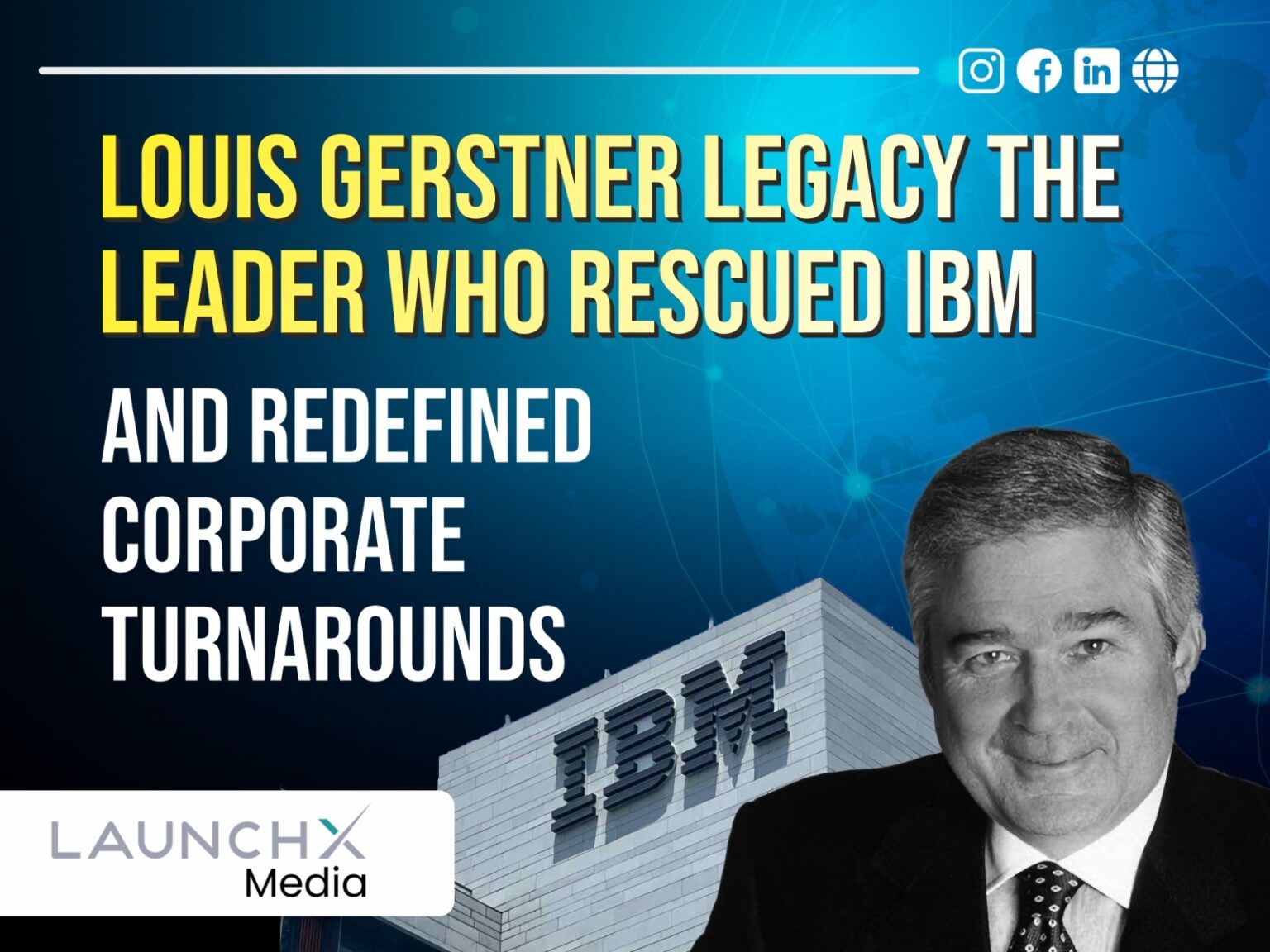

Louis Gerstner Legacy: The Leader Who Rescued IBM and Redefined Corporate Turnarounds
Louis Gerstner Legacy: 7 Powerful Ways He Saved IBM Forever
The business world is remembering Louis Gerstner, the former CEO of IBM whose bold leadership rescued the iconic technology company from near collapse. Gerstner passed away at the age of 83, leaving behind a legacy that reshaped not only IBM but also modern corporate management.
- Louis Gerstner Legacy: 7 Powerful Ways He Saved IBM Forever
- IBM Before Gerstner: A Company in Crisis
- Louis Gerstner’s Bold Vision for IBM
- Transforming IBM Into a Services Powerhouse
- Leadership Style That Redefined Corporate Culture
- Life Beyond IBM
- Why Louis Gerstner’s Legacy Still Matters Today
- The End of an Era, Not the End of Influence
- FAQs
His tenure at IBM is widely regarded as one of the most successful business turnarounds in history.

IBM Before Gerstner: A Company in Crisis
The Challenges Facing Big Blue
When Louis Gerstner took the helm of IBM in the early 1990s, the company was struggling with:
Massive financial losses
Internal fragmentation
Rapidly changing technology markets
Questions about whether IBM should be broken apart
Many believed IBM’s best days were behind it.
Louis Gerstner’s Bold Vision for IBM
Rejecting the Breakup Strategy
One of Gerstner’s most defining decisions was refusing to split IBM into smaller companies. At a time when analysts favored dismantling the firm, he believed IBM’s true strength lay in its ability to offer integrated solutions.
This contrarian move became the foundation of IBM’s revival.

Transforming IBM Into a Services Powerhouse
A Strategic Shift That Changed Everything
Gerstner redirected IBM’s focus from hardware dominance to technology services and consulting, allowing the company to:
Build long-term enterprise relationships
Offer end-to-end business solutions
Adapt to the rise of software and internet technologies
This pivot helped IBM regain profitability and relevance in a rapidly evolving tech landscape.
Leadership Style That Redefined Corporate Culture
Discipline, Accountability, and Customer Focus
Gerstner was known for his no-nonsense leadership style. He emphasized:
Accountability at every management level
Deep understanding of customer needs
Performance-driven decision-making
By aligning IBM’s culture around customer outcomes rather than internal politics, he restored trust both inside and outside the company.
Life Beyond IBM
After stepping down from IBM, Gerstner continued to influence business and public policy through board roles, advisory positions, and philanthropy. His insights on leadership and transformation became case studies in business schools worldwide.

Why Louis Gerstner’s Legacy Still Matters Today
Lessons for Modern Leaders
In an era defined by disruption, Gerstner’s leadership offers timeless lessons:
Focus on customers, not trends
Don’t fear unpopular decisions
Culture change drives strategy success
Execution matters more than vision alone
His approach remains relevant for CEOs navigating AI, digital transformation, and global uncertainty.
The End of an Era, Not the End of Influence
Louis Gerstner didn’t just save IBM—he rewrote the playbook for corporate turnarounds. His ability to combine strategic clarity with operational discipline turned a struggling icon into a resilient global enterprise.
As businesses face new waves of disruption, Gerstner’s legacy serves as a powerful reminder: leadership, not technology alone, determines success.

FAQs
1. Who was Louis Gerstner?
Louis Gerstner was the former CEO of IBM known for leading its historic turnaround.
2. How old was Louis Gerstner when he died?
He passed away at the age of 83.
3. Why is Gerstner important in business history?
He led one of the most successful corporate revivals ever.
4. What major decision defined his IBM leadership?
He refused to break up IBM and instead unified it around services.
5. How did he change IBM’s business model?
He shifted the company toward services and enterprise solutions.
6. What leadership style was Gerstner known for?
Direct, disciplined, customer-focused, and results-driven.
7. Did Gerstner come from a tech background?
No, which made his success at IBM even more notable.
8. What industries did IBM expand into under his leadership?
Technology services, consulting, and enterprise software.
9. Are Gerstner’s leadership lessons still relevant today?
Yes, especially during periods of disruption and transformation.
10. How is Louis Gerstner remembered today?
As a visionary leader who saved IBM and redefined corporate leadership.


