

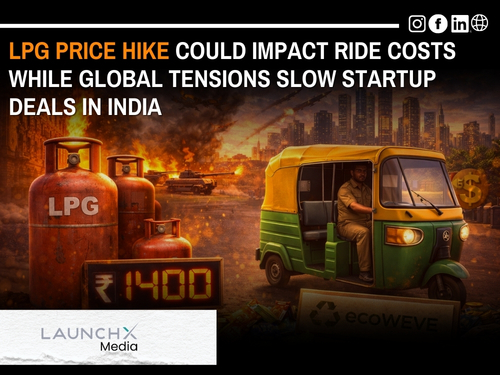

LPG Price Hike Could Impact Ride Costs While Global Tensions Slow Startup Deals in India
LPG Price Hike: 5 Powerful Impacts on Uber Ola & Rapido Ride Costs in India
Economic developments rarely occur in isolation. Fuel prices, global geopolitics, and startup funding trends often influence each other in unexpected ways. Recent developments indicate that rising LPG prices, international tensions, and shifting investment patterns could shape the near-term outlook for India’s ride-hailing industry and startup ecosystem.
- LPG Price Hike: 5 Powerful Impacts on Uber Ola & Rapido Ride Costs in India
- LPG Price Increase and Its Impact on Ride-Hailing Services
- The Ripple Effect on Urban Mobility
- Global Geopolitical Tensions and Startup Market Uncertainty
- Impact on Startup Funding and Deals
- Government Support for Deeptech Innovation
- Why Deeptech Startups Matter for India’s Future
- The Broader Outlook for India’s Startup Ecosystem
- What This Means for Consumers and Entrepreneurs
From possible increases in ride fares for services such as Uber, Ola, and Rapido to delays in startup IPO plans, several economic signals suggest that both consumers and entrepreneurs may experience ripple effects in the coming months.
At the same time, government initiatives to support deeptech innovation indicate that India’s long-term startup momentum remains strong.
LPG Price Increase and Its Impact on Ride-Hailing Services
Liquefied Petroleum Gas (LPG) is widely used as an alternative fuel in many vehicles operating in urban transportation networks. Auto-rickshaws, taxis, and certain ride-hailing vehicles rely on LPG because it is generally more affordable and cleaner than petrol or diesel.
When LPG prices rise, transportation operators often face higher operating costs. These costs may eventually translate into increased fares for customers using ride-hailing platforms.
For drivers working with platforms such as Uber, Ola, and Rapido, fuel costs represent one of the largest operational expenses. Even a modest increase in LPG prices can significantly affect daily earnings and profitability.
In response, drivers and service providers may push for fare adjustments to maintain sustainable income levels.

The Ripple Effect on Urban Mobility
Ride-hailing platforms have become an integral part of urban mobility across India. Millions of commuters rely on these services for daily transportation, especially in large cities where traffic congestion and limited parking make private car usage challenging.
If fuel costs rise and ride fares increase, commuters could experience higher daily transportation expenses.
This could also encourage some consumers to explore alternative mobility options such as public transport, shared rides, or electric mobility solutions.
For ride-hailing companies, balancing driver income with customer affordability will remain an ongoing challenge.
Global Geopolitical Tensions and Startup Market Uncertainty
Economic conditions around the world can influence startup funding and IPO activity. Rising geopolitical tensions in regions such as West Asia have introduced additional uncertainty into global markets.
Such uncertainty often makes investors more cautious. Venture capital firms and institutional investors may delay large investments until market conditions stabilize.
As a result, some Indian startups that were preparing for initial public offerings (IPOs) may postpone their plans.
Startup IPO markets tend to perform best during periods of economic stability and strong investor confidence.
When global risks increase, companies often prefer to wait for more favorable conditions before entering public markets.
Impact on Startup Funding and Deals
The slowdown in IPO activity does not necessarily mean that the startup ecosystem is weakening. Instead, it reflects temporary caution among investors.
During uncertain periods, investors typically focus on startups with strong business fundamentals, sustainable revenue models, and clear profitability paths.
Early-stage innovation and long-term technology development often continue despite market fluctuations.
India’s startup ecosystem remains one of the fastest-growing in the world, with strong entrepreneurial activity across sectors such as fintech, deeptech, artificial intelligence, and digital commerce.

Government Support for Deeptech Innovation
While market uncertainty affects private investment cycles, government initiatives can provide additional support to innovation ecosystems.
State governments across India have increasingly launched programs aimed at supporting emerging technology startups.
Tamil Nadu, for example, has taken steps to invest in deeptech startups working on advanced technologies.
Deeptech startups typically focus on areas such as artificial intelligence, robotics, semiconductor technologies, advanced materials, and space technology.
Government investment in these sectors can help startups conduct research, develop prototypes, and accelerate commercialization.
Such initiatives play a critical role in building long-term technological capabilities within the country.
Why Deeptech Startups Matter for India’s Future
Deeptech innovation often requires significant research investment and longer development timelines compared to traditional digital startups.
However, these technologies can create substantial economic value and global competitiveness.
Countries that invest in deeptech innovation are better positioned to lead in emerging industries such as AI, advanced manufacturing, and next-generation computing.
By supporting early-stage deeptech companies, governments can help create a strong pipeline of high-impact technology ventures.
The Broader Outlook for India’s Startup Ecosystem
Despite short-term uncertainties, India’s startup ecosystem continues to demonstrate resilience.
Several factors continue to support long-term growth:
A large and growing digital consumer market
Increasing adoption of technology across industries
Strong entrepreneurial talent pool
Government initiatives supporting innovation
Growing investor interest in emerging technologies
Even when market conditions slow IPO activity or large funding rounds, innovation and entrepreneurship continue to thrive.
The key for startups during uncertain times is maintaining financial discipline while continuing to build strong products and services.
What This Means for Consumers and Entrepreneurs
For consumers, rising fuel prices may lead to slightly higher ride-hailing costs in the near future. However, competition among ride platforms and alternative mobility options may help limit large price increases.
For entrepreneurs and investors, the current environment highlights the importance of building sustainable businesses rather than relying solely on rapid expansion.
Startups with clear value propositions and strong operational models are more likely to attract investment even during uncertain economic conditions.
While global events can influence markets, India’s long-term innovation potential remains strong.

FAQS
- Why have LPG prices recently increased in India?
LPG prices can rise due to changes in global energy markets, fluctuations in crude oil prices, supply chain disruptions, and geopolitical developments that impact fuel availability and transportation costs. - How could the LPG price hike affect ride-hailing platforms?
When LPG prices increase, drivers who rely on LPG-powered vehicles face higher fuel expenses. This can lead to requests for fare adjustments, which may eventually result in slightly higher ride prices on platforms like Uber, Ola, and Rapido. - Why do many commercial vehicles prefer LPG as fuel?
LPG is often considered a cost-effective and environmentally cleaner alternative compared to petrol or diesel. Because of its lower emissions and relatively affordable pricing, many commercial transport operators choose LPG. - How do global geopolitical tensions influence startup IPO plans?
International conflicts and geopolitical instability can create uncertainty in financial markets. When investors become cautious, startups often postpone their IPO launches until market conditions stabilize and investor confidence improves. - Is there currently a slowdown in Indian startup IPO activity?
Some startups are delaying their public listing plans due to global economic uncertainty. However, the overall startup ecosystem in India continues to grow with ongoing investments and innovation. - What exactly is a deeptech startup?
Deeptech startups are companies built around advanced scientific research and engineering breakthroughs. They typically work in areas like artificial intelligence, robotics, biotechnology, space technology, and semiconductor development. - Why do deeptech startups require government support?
Deeptech innovation usually involves long development cycles and significant research investment. Government funding, grants, and innovation programs can help startups conduct research and bring advanced technologies to market. - Which state government is supporting deeptech startups in this case?
The Tamil Nadu government has launched initiatives to financially support and promote selected deeptech startups, aiming to strengthen innovation and technological development in the region. - Will ride fares increase drastically due to higher LPG prices?
Large fare increases are unlikely in the short term. Ride-hailing companies usually try to balance driver earnings with customer affordability, so any fare changes are typically gradual. - What does the future look like for India’s startup ecosystem?
Despite global uncertainties, India’s startup ecosystem remains strong. Continued digital adoption, strong entrepreneurial talent, and increasing investor interest are expected to support long-term growth.


