

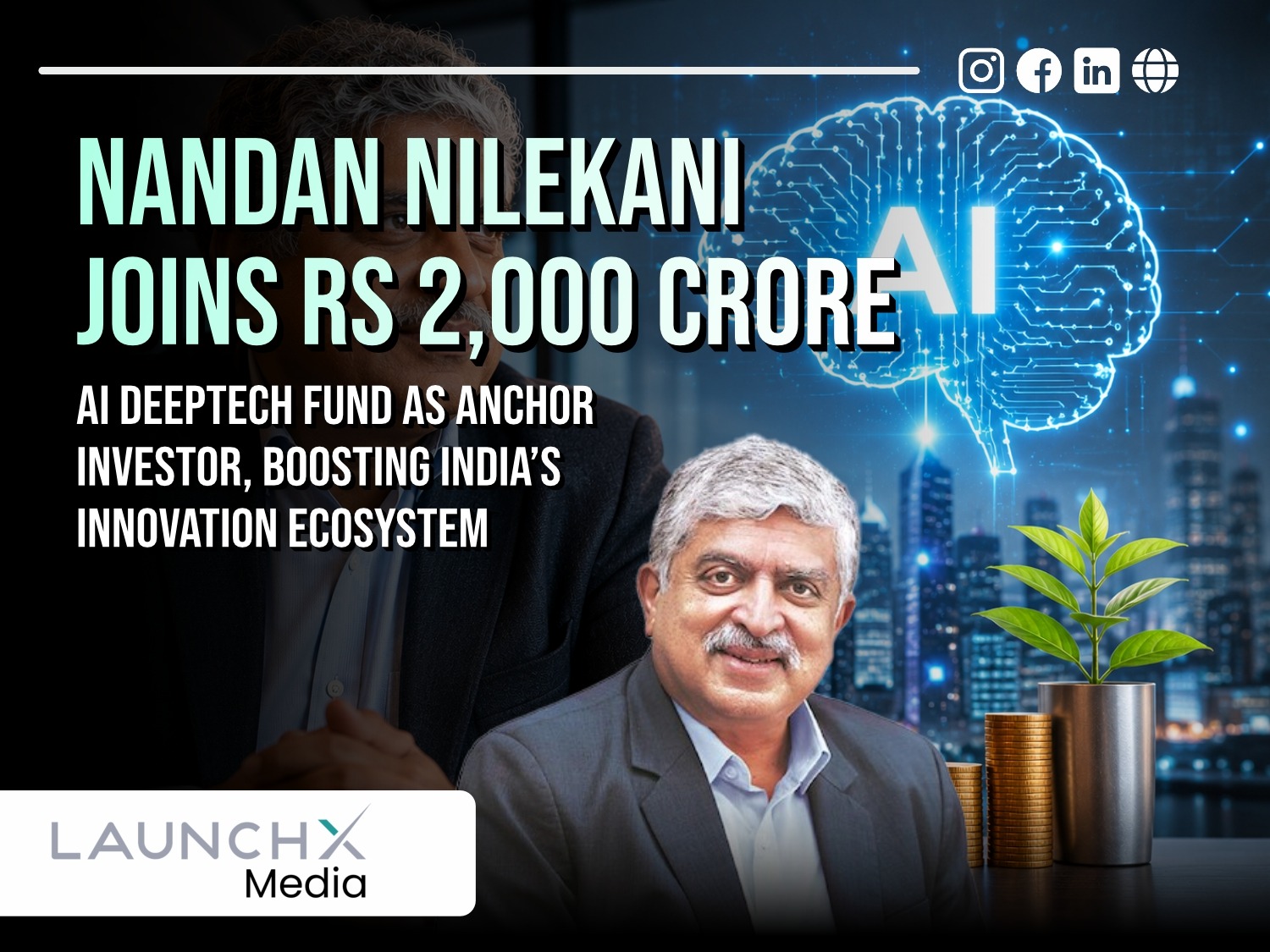

Nandan Nilekani Joins Rs 2,000 Crore AI Deeptech Fund as Anchor Investor, Boosting India’s Innovation Ecosystem
Nandan Nilekani Joins Powerful Rs 2000 Crore AI Deeptech Fund as Anchor Investor
India’s artificial intelligence and deeptech startup ecosystem has received a major boost as Infosys co-founder Nandan Nilekani joined as an anchor investor in F2A’s ambitious Rs 2,000 crore AI deeptech fund. The move has generated significant attention across India’s startup and venture capital landscape, especially at a time when AI innovation is becoming one of the world’s most competitive technological battlegrounds.
The participation of a respected technology leader like Nilekani is widely viewed as a strong signal of confidence in India’s growing AI capabilities and the future of deeptech entrepreneurship in the country.
The new fund is expected to focus on supporting startups working in cutting-edge areas such as:
- Artificial intelligence
- Machine learning
- Deeptech infrastructure
- Enterprise automation
- Robotics
- Advanced computing
- Data intelligence
- Emerging technology solutions
As global investment increasingly shifts toward AI-driven innovation, India is positioning itself as a serious contender in the next generation of technology development.

Why Nandan Nilekani’s Involvement Matters
Nandan Nilekani is regarded as one of India’s most influential technology entrepreneurs and ecosystem builders.
Beyond co-founding Infosys, he has played a major role in shaping India’s digital infrastructure through initiatives involving:
- Digital identity systems
- Public technology infrastructure
- Financial inclusion
- Digital governance
- Technology-driven transformation
His involvement in an AI-focused investment initiative sends a powerful message to:
- Investors
- Founders
- policymakers
- Global technology communities
Strong Validation for AI Startups
Anchor investors often provide:
- Financial credibility
- Strategic trust
- Ecosystem visibility
- Institutional confidence
For early-stage and deeptech startups, backing from respected industry leaders can significantly improve fundraising momentum and market confidence.
Long-Term Vision for India’s Technology Future
The investment also reflects growing recognition that artificial intelligence and deeptech may define the next phase of India’s economic and technological growth.
Understanding Deeptech and Why It Is Important
Deeptech refers to startups and companies built around advanced scientific or engineering innovation.
Unlike traditional consumer internet businesses, deeptech companies often focus on:
- Complex technologies
- Fundamental research
- Long-term innovation
- High intellectual property value
Examples of Deeptech Sectors
Artificial Intelligence
AI-powered systems capable of automation, prediction, analytics, and intelligent decision-making.
Robotics
Machines and automation systems used across industries including manufacturing, healthcare, and logistics.
Advanced Computing
Cloud infrastructure, edge computing, semiconductors, and high-performance computing systems.
Biotechnology
Science-driven innovations in healthcare, agriculture, and industrial biology.
Climate Technology
Advanced sustainability-focused solutions including energy optimization and environmental analytics.
Deeptech startups typically require patient capital because development cycles are longer than standard software startups.
India’s AI Ecosystem Is Entering a New Phase
India’s AI startup ecosystem has expanded rapidly in recent years.
Several factors are driving this growth:
- Availability of digital data
- Expanding developer talent pool
- Cloud infrastructure growth
- Enterprise digitization
- Rising startup activity
- Government focus on digital innovation
AI applications are now spreading across industries including:
- Healthcare
- Finance
- Education
- Agriculture
- Logistics
- Retail
- Manufacturing
AI Is Becoming Core Business Infrastructure
Artificial intelligence is no longer viewed as an experimental technology.
Businesses increasingly use AI for:
- Automation
- Customer service
- Fraud detection
- Predictive analytics
- Workflow optimization
- Decision intelligence
This creates massive opportunities for startups building AI-driven products and infrastructure.
Why Investors Are Focusing on AI and Deeptech
Global venture capital activity has increasingly shifted toward AI-focused businesses.
Key Reasons Behind AI Investment Growth
Massive Market Opportunity
AI is expected to influence nearly every major industry over the next decade.
Productivity Transformation
AI can dramatically improve operational efficiency and automation.
High Scalability
Technology-driven platforms can scale globally once proven successful.
Strong Enterprise Demand
Businesses worldwide are actively investing in AI integration.
Long-Term Competitive Advantage
Companies building proprietary AI systems often create strong intellectual property advantages.
The Role of Large AI Funds in Startup Growth
Building deeptech and AI companies requires substantial financial support.
Unlike lightweight software startups, deeptech ventures often need:
- Research infrastructure
- Specialized talent
- High computing resources
- Long development timelines
Large AI-focused funds can help startups:
- Scale faster
- Build advanced products
- Compete globally
- Reduce financial pressure during R&D phases
Importance of Patient Capital
Deeptech startups generally require investors willing to support:
- Long-term experimentation
- Product development cycles
- Infrastructure-heavy growth models
This is why dedicated AI and deeptech funds are becoming increasingly important worldwide.
India’s Opportunity in the Global AI Race
Countries around the world are competing aggressively in AI development.
The United States and China currently dominate large-scale AI innovation, but India possesses several structural advantages.
India’s Key Strengths
Large Technology Talent Pool
India produces millions of engineers and software professionals.
Digital Infrastructure
The country’s digital public infrastructure ecosystem supports rapid innovation.
Growing Startup Ecosystem
India already hosts one of the world’s largest startup ecosystems.
Expanding Enterprise Digitization
Businesses across sectors are adopting AI-powered solutions.
These factors create strong long-term potential for India’s AI economy.

Challenges Facing AI and Deeptech Startups
Despite optimism, AI startups still face multiple challenges.
Access to Capital
Deeptech ventures often require larger funding rounds compared to traditional startups.
Talent Competition
Global demand for AI researchers and engineers remains extremely high.
Infrastructure Costs
Training advanced AI models requires:
- High-performance computing
- Cloud resources
- Data infrastructure
These costs can become significant.
Regulatory and Ethical Concerns
AI development also raises questions related to:
- Data privacy
- Algorithmic bias
- Responsible AI usage
- Governance frameworks
Balancing innovation with regulation will remain critical.
Why This Fund Could Strengthen India’s Innovation Economy
The Rs 2,000 crore AI deeptech fund may contribute to building stronger domestic innovation capabilities.
Potential Ecosystem Benefits
Encouraging More AI Startups
Access to capital often inspires more founders to enter emerging sectors.
Strengthening Research Commercialization
Academic and scientific research can transition more effectively into commercial products.
Creating Global Technology Companies
India could produce globally competitive AI startups.
Attracting International Attention
Large deeptech investments increase global visibility for India’s innovation ecosystem.
The Rise of AI-First Startups in India
A new generation of Indian startups is now being built around AI from day one.
Unlike earlier software companies that later integrated AI features, these startups are:
- AI-native
- Automation-driven
- Data-centric
- Infrastructure-focused
This shift could reshape India’s technology landscape over the next decade.
Enterprise AI Is Becoming a Major Opportunity
Indian enterprises increasingly seek AI solutions for:
- Customer engagement
- Supply chain management
- Operational efficiency
- Cybersecurity
- Business intelligence
Startups solving enterprise AI problems may see strong long-term demand.
Government Support and Policy Momentum
India’s broader digital transformation agenda also supports deeptech innovation.
Government initiatives promoting:
- Digital infrastructure
- Semiconductor manufacturing
- Startup growth
- Research ecosystems
could indirectly benefit AI startups.
Policy support may become increasingly important as countries globally compete for AI leadership.
Future Outlook for India’s AI Deeptech Sector
The future appears highly promising for India’s AI and deeptech ecosystem.
Areas Likely to See Strong Growth
Generative AI
AI-generated content, coding, and automation tools are expanding rapidly.
AI Infrastructure
Cloud platforms, AI chips, and computing infrastructure will become increasingly important.
Healthcare AI
Medical diagnostics and health-tech AI solutions may grow significantly.
Industrial Automation
Manufacturing and logistics automation remain major opportunities.
Lessons for Startups and Investors
The rise of dedicated AI funds offers several important lessons.
Key Takeaways
Deeptech Requires Patience
Unlike quick-scaling consumer apps, deeptech innovation often takes time.
Ecosystem Support Matters
Strong investor networks and strategic mentorship can accelerate startup success.
India’s Innovation Potential Is Expanding
The country is increasingly moving beyond services into core technology innovation.
Final Thoughts
Nandan Nilekani joining F2A’s Rs 2,000 crore AI deeptech fund marks an important milestone for India’s emerging innovation economy. The move reflects growing confidence in artificial intelligence, deeptech entrepreneurship, and India’s ability to compete in the next global technology wave.
As AI continues reshaping industries worldwide, access to dedicated deeptech capital may become one of the most important growth drivers for Indian startups.
The participation of experienced technology leaders and institutional investors could help accelerate India’s transformation from a technology services hub into a global center for AI innovation and advanced technological development.
For founders, investors, and policymakers, the message is clear: the future of India’s startup ecosystem may increasingly be driven by science, deep technology, and artificial intelligence.

FAQs
- What is the Rs 2,000 crore AI deeptech fund?
It is an investment fund focused on supporting AI and deeptech startups in India.
- Who is Nandan Nilekani?
Nandan Nilekani is the co-founder of Infosys and a leading technology entrepreneur and investor.
- Why is Nilekani’s involvement important?
His participation increases credibility, investor confidence, and visibility for India’s AI startup ecosystem.
- What is deeptech?
Deeptech refers to advanced technology startups based on scientific innovation and engineering breakthroughs.
- Which sectors are included in deeptech?
Deeptech includes AI, robotics, biotechnology, advanced computing, climate tech, and automation technologies.
- Why are investors focusing on AI startups?
AI offers large market opportunities, scalability, automation benefits, and long-term competitive advantages.
- What challenges do AI startups face?
Major challenges include funding requirements, infrastructure costs, talent shortages, and regulatory complexity.
- How can AI funds help startups?
Dedicated funds provide capital, mentorship, ecosystem support, and long-term growth resources.
- Why is India becoming important in AI innovation?
India has a strong technology talent pool, growing digital infrastructure, and expanding startup ecosystem.
- What is the future outlook for India’s AI ecosystem?
India’s AI ecosystem is expected to grow rapidly across enterprise technology, automation, healthcare, and digital infrastructure sectors.