

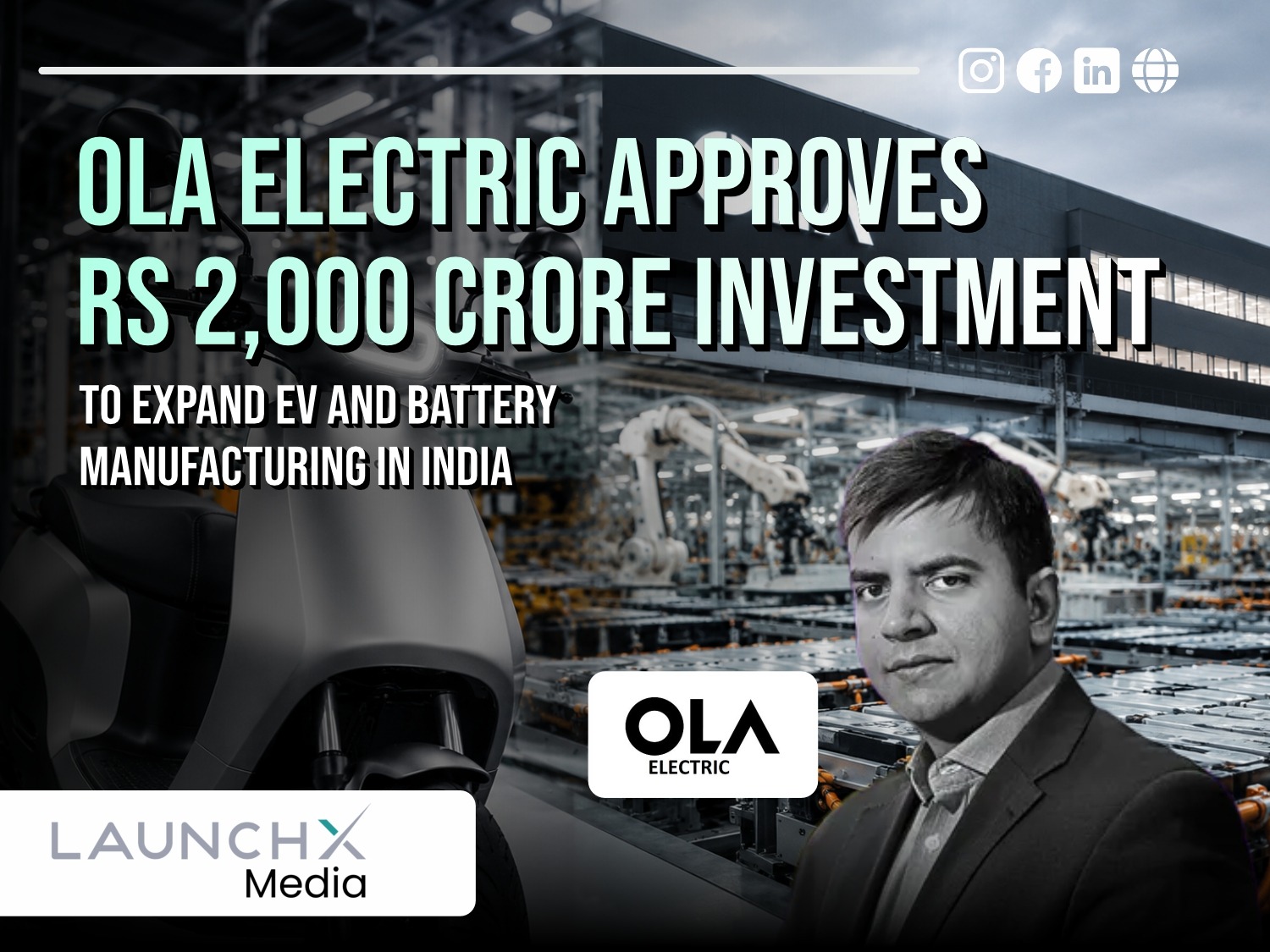

Ola Electric Approves Rs 2,000 Crore Investment to Expand EV and Battery Manufacturing in India
Ola Electric Bets Big on Indias EV Future with Massive Rs 2000 Crore Expansion Plan
India’s electric vehicle revolution is entering a new phase, and Ola Electric is making one of its boldest moves yet. The company has approved an investment of Rs 2,000 crore into its electric vehicle and battery manufacturing operations, signaling a strong commitment toward long-term growth, localization, and profitability in India’s rapidly evolving EV ecosystem.
The latest investment decision comes at a time when competition in India’s electric two-wheeler market is becoming increasingly intense. With traditional automobile giants and emerging startups fighting for market share, Ola Electric appears focused on strengthening its manufacturing backbone while reducing operational dependence on external suppliers.
This strategic move could reshape not only the company’s future but also India’s broader electric mobility landscape.
Ola Electric’s Big Bet on EV and Battery Manufacturing
Ola Electric has announced plans to infuse Rs 2,000 crore into its core electric vehicle and battery cell businesses over the next few years. The investment is expected to support:
- Expansion of EV manufacturing capacity
- Advanced battery cell production
- Automation and operational efficiency
- Localization of EV supply chains
- Research and development initiatives
- Cost optimization and margin improvement
The company is aggressively building its in-house battery ecosystem, which is increasingly becoming one of the most critical aspects of the electric vehicle industry globally.
Battery technology accounts for a significant portion of EV costs, and companies that control battery manufacturing often gain a major competitive advantage. By strengthening domestic battery production, Ola Electric aims to reduce costs, improve supply stability, and enhance product performance.

Why Battery Localization Matters in India
India’s EV sector still relies heavily on imported battery materials and components. This dependence creates several challenges, including:
Rising Import Costs
Global supply chain disruptions and fluctuating raw material prices can significantly impact EV pricing.
Geopolitical Risks
Countries worldwide are racing to secure battery resources and manufacturing capabilities. Localization reduces exposure to international uncertainty.
Faster Innovation
Domestic battery manufacturing enables faster product upgrades, customization, and technology improvements.
Better Profit Margins
Producing battery cells internally helps companies lower manufacturing costs over time.
For Ola Electric, battery localization is not just a manufacturing strategy — it is a long-term survival strategy in an increasingly competitive EV market.
India’s EV Industry Is Growing Rapidly
The Indian electric vehicle market has witnessed explosive growth over the past few years. Rising fuel prices, government incentives, improved charging infrastructure, and growing environmental awareness have accelerated EV adoption across urban and semi-urban regions.
Electric scooters, in particular, have become one of the fastest-growing categories in the Indian automobile industry.
Several factors are driving this growth:
Government Push for Clean Mobility
Policies promoting electric mobility and local manufacturing are encouraging EV adoption nationwide.
Consumer Cost Savings
Electric two-wheelers offer lower running and maintenance costs compared to petrol vehicles.
Expanding Charging Infrastructure
India is steadily improving its charging ecosystem, making EV ownership more practical.
Technology Advancements
Battery efficiency, software integration, and smart connectivity features are improving rapidly.
Ola Electric wants to capitalize on this momentum before the market becomes even more crowded.
Ola Electric’s Manufacturing Vision
One of the company’s biggest strengths has been its manufacturing ambition. Ola Electric has consistently positioned itself as more than just an EV startup.
The company is building a vertically integrated ecosystem that includes:
- Electric scooter manufacturing
- Battery cell production
- Software platforms
- Energy storage systems
- Charging infrastructure
- Smart mobility technologies
Its large-scale manufacturing facilities and battery-focused strategy indicate that Ola Electric is trying to become a complete EV technology company rather than simply a vehicle seller.
This approach mirrors global EV leaders that focus heavily on supply chain control and manufacturing scale.
Can This Investment Improve Profitability?
Profitability remains one of the biggest challenges for EV startups worldwide. Despite strong demand growth, many companies continue to struggle with:
- High production costs
- Battery expenses
- Customer acquisition costs
- Service network expansion
- Infrastructure investments
Ola Electric has also faced pressure regarding margins, operational efficiency, and customer service challenges.
The Rs 2,000 crore investment could help the company improve profitability through:
Automation
Increased automation can reduce manufacturing costs and improve consistency.
Economies of Scale
Higher production volumes often lower per-unit costs.
Battery Cost Reduction
In-house cell manufacturing can significantly improve margins.
Supply Chain Control
Reduced reliance on imports minimizes volatility and delays.
If executed effectively, this investment could strengthen Ola Electric’s financial position over the next several years.
Rising Competition in India’s EV Space
India’s EV market is no longer an open field. Competition is intensifying rapidly with established automobile manufacturers expanding aggressively into electric mobility.
Major competitors include:
- Bajaj Auto
- TVS Motor
- Ather Energy
- Hero MotoCorp
- emerging EV startups
These companies are improving product quality, expanding dealer networks, and offering stronger after-sales support.
As competition increases, companies can no longer rely solely on aggressive marketing or early-mover advantage. Sustainable manufacturing, customer trust, service quality, and battery innovation are becoming the real differentiators.
Ola Electric’s investment signals that the company understands this shift.
Battery Technology Could Define the Next EV Leaders
The future of the EV industry may ultimately depend on battery innovation.
Companies that can deliver:
- Longer range
- Faster charging
- Better thermal management
- Lower battery degradation
- Affordable pricing
will likely dominate the next decade of electric mobility.
Ola Electric’s battery investments indicate that the company wants to compete not just on scooter sales but on core EV technology itself.
This could open opportunities beyond scooters, including:
Energy Storage Systems
Battery systems for homes and businesses could become a massive future market.
EV Components
Supplying battery technology to other manufacturers may create additional revenue streams.
Grid Energy Solutions
Large-scale energy storage could become critical for renewable energy adoption.
Future Mobility Products
Battery innovation can support future electric motorcycles, cars, and commercial vehicles.

Challenges Ola Electric Still Needs to Address
While the investment announcement is ambitious, execution remains critical.
The company still faces several important challenges:
Customer Service Quality
Service delays and customer support concerns have affected consumer perception in certain markets.
Market Trust
Building long-term trust requires consistent product reliability and service excellence.
Operational Efficiency
Rapid expansion must be balanced with sustainable financial management.
Technology Scaling
Battery manufacturing at scale is highly complex and capital intensive.
Competitive Pressure
Traditional automakers have deep manufacturing expertise and established networks.
Successfully overcoming these challenges will determine whether Ola Electric can maintain leadership in India’s EV industry.
What This Means for India’s EV Ecosystem
Ola Electric’s investment is larger than just a corporate expansion story. It reflects a broader transformation happening in India’s manufacturing and mobility sectors.
The investment could contribute to:
- Job creation
- Advanced manufacturing growth
- Domestic battery production
- Reduced import dependence
- Stronger EV supply chains
- Increased innovation in clean mobility
India is aiming to become a global hub for electric vehicle manufacturing, and investments like these support that long-term vision.
As more companies invest in local EV ecosystems, India could emerge as one of the world’s largest electric mobility markets over the next decade.
The Road Ahead for Ola Electric
The next few years will be crucial for Ola Electric.
The company is transitioning from a fast-growing startup into a large-scale manufacturing and technology enterprise. This phase requires disciplined execution, operational excellence, and continuous innovation.
If Ola Electric can successfully scale battery production, improve customer experience, and maintain competitive pricing, it could remain one of the most influential players in India’s EV revolution.
However, the road ahead will not be easy. The EV industry is evolving rapidly, and only companies with strong technology, manufacturing capabilities, and customer trust will survive long term.
Still, one thing is clear: Ola Electric’s Rs 2,000 crore investment marks a major milestone in India’s electric mobility journey.

- FAQs
- Why is Ola Electric investing Rs 2,000 crore?
The investment aims to expand EV manufacturing, battery cell production, automation, and operational efficiency.
- What will the investment be used for?
The funds will support EV production facilities, battery manufacturing, supply chain localization, and technology development.
- Why is battery localization important?
Localized battery manufacturing reduces import dependency, lowers costs, and improves supply chain stability.
- How does this impact India’s EV market?
It strengthens domestic manufacturing and accelerates the growth of India’s electric mobility ecosystem.
- Will Ola Electric manufacture its own battery cells?
Yes, the company is expanding its in-house battery cell manufacturing capabilities.
- Can this investment improve Ola Electric’s profitability?
Potentially yes, as battery localization and automation can reduce production costs over time.
- Who are Ola Electric’s biggest competitors?
Major competitors include Bajaj Auto, TVS Motor, Ather Energy, and Hero MotoCorp.
- Is India’s electric scooter market growing?
Yes, electric scooters are among the fastest-growing segments in India’s automobile industry.
- What are the biggest challenges for EV companies?
Battery costs, charging infrastructure, customer service, and profitability remain key challenges.
- What does this mean for India’s manufacturing sector?
The investment supports advanced manufacturing, job creation, and domestic EV supply chain development.


