

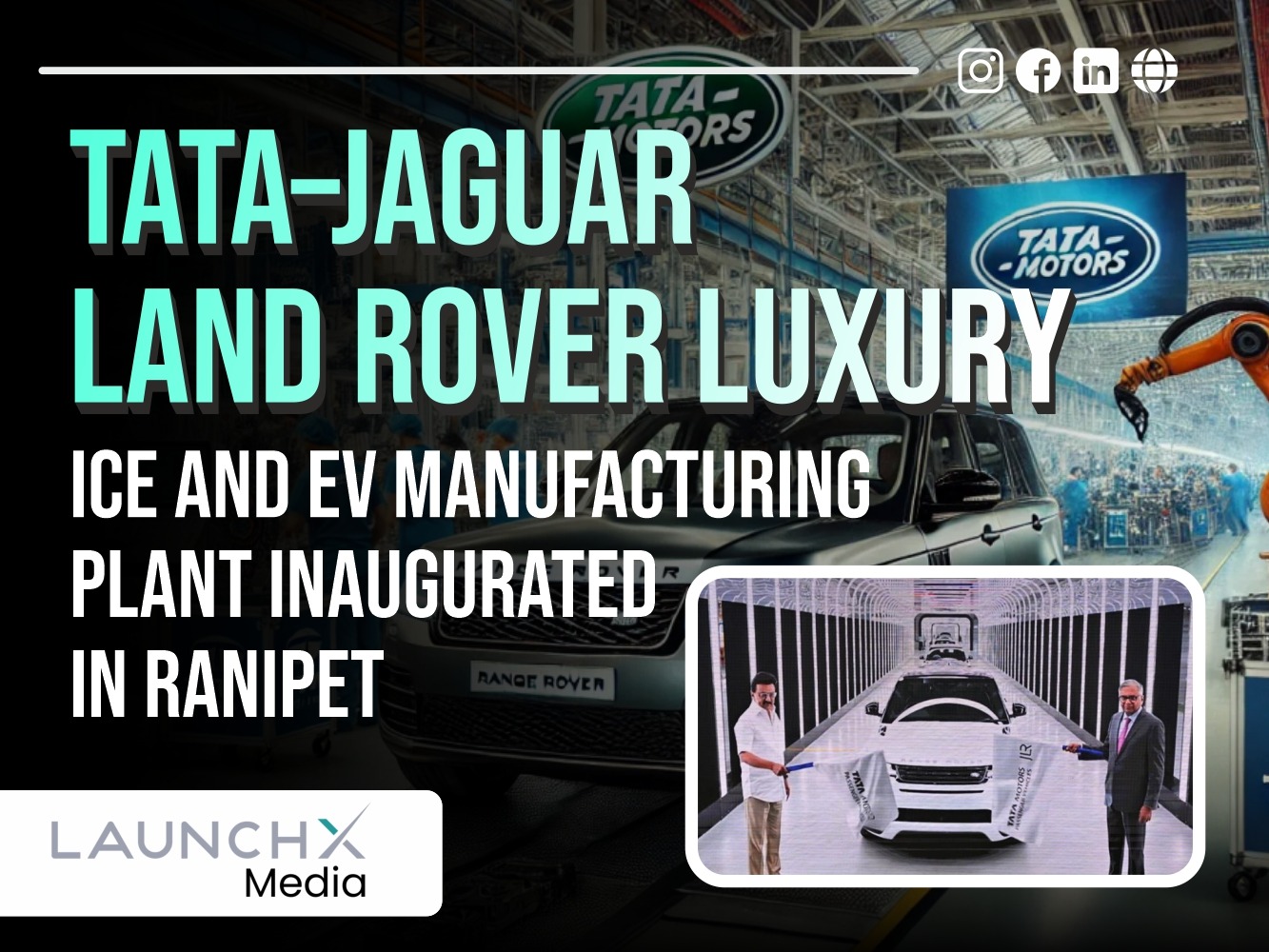

Tata–Jaguar Land Rover Luxury ICE and EV Manufacturing Plant Inaugurated in Ranipet
Tata JLR Ranipet Plant: 5 Game-Changing Updates from the Bold Luxury ICE & EV Facility Launch
Tamil Nadu has taken another major step toward strengthening India’s automotive and electric vehicle ecosystem with the inauguration of a new luxury vehicle manufacturing facility by Tata Group and Jaguar Land Rover in Ranipet. The plant, launched in the presence of Chief Minister MK Stalin, is expected to boost high-end automobile production, create employment opportunities, and accelerate the transition toward electric mobility.
- Tata JLR Ranipet Plant: 5 Game-Changing Updates from the Bold Luxury ICE & EV Facility Launch
- A Strategic Investment in India’s Automotive Future
- Bridging ICE and EV: A Dual Manufacturing Strategy
- Economic Impact and Job Creation
- Implications for India’s Luxury Car Market
- Strengthening India’s EV Ecosystem
- FAQs (10)
The facility will focus on manufacturing both internal combustion engine (ICE) vehicles and electric vehicles (EVs), highlighting a balanced strategy that supports current market demand while preparing for the future of sustainable transportation.

A Strategic Investment in India’s Automotive Future
The Ranipet plant represents a significant investment in advanced automobile manufacturing. By combining luxury car production with EV capabilities, the facility aims to position Tamil Nadu as a critical hub for next-generation mobility solutions in India.
This development aligns with the state’s long-standing reputation as one of India’s leading automotive manufacturing clusters, often referred to as the “Detroit of India.” With global brands already operating in the region, the addition of Tata and Jaguar Land Rover further strengthens the ecosystem.
Why Ranipet Was Chosen
Ranipet offers strong infrastructure, industrial connectivity, and proximity to key ports and logistics networks. The region has steadily emerged as a favorable destination for large-scale manufacturing investments due to:
Established supplier ecosystem
Skilled workforce availability
Supportive state industrial policies
Strong logistics and connectivity
These advantages make it an ideal location for both luxury car manufacturing and EV production.

Bridging ICE and EV: A Dual Manufacturing Strategy
One of the most notable aspects of the plant is its dual focus on ICE and EV vehicles. While electric mobility is rapidly gaining traction, ICE vehicles continue to dominate market demand. By producing both, Tata and Jaguar Land Rover are ensuring flexibility and resilience in a transitioning automotive landscape.
Strengthening Electric Mobility in India
The EV segment is expected to play a central role in the plant’s long-term roadmap. The facility will contribute to:
Increased EV production capacity
Technology transfer and innovation
Localization of EV components
Support for India’s clean mobility mission
This move supports national and state-level sustainability goals while reducing dependence on imports.
Continued Importance of ICE Vehicles
Despite the EV push, internal combustion engine vehicles remain essential for many markets and customer segments. The plant ensures that production capabilities remain aligned with current demand while gradually shifting toward electrification.

Economic Impact and Job Creation
Large manufacturing facilities typically generate direct and indirect employment opportunities across multiple sectors. The Ranipet plant is expected to create jobs in:
Automotive assembly
Supply chain and logistics
Component manufacturing
Maintenance and services
Local businesses, vendors, and suppliers are also likely to benefit from increased economic activity.
Boost for Tamil Nadu’s Industrial Growth
The project reinforces Tamil Nadu’s reputation as a business-friendly state with strong industrial policies. It also reflects growing investor confidence in the state’s ability to support large-scale manufacturing and innovation.

Implications for India’s Luxury Car Market
Luxury vehicle demand in India is rising steadily, driven by growing affluence, urbanization, and aspirational consumers. A domestic production facility can help:
Reduce production costs
Improve supply chain efficiency
Enable faster delivery timelines
Expand access to premium vehicles
The plant may also help increase exports of luxury vehicles manufactured in India, positioning the country as a global automotive production hub.
Technology, Innovation, and Future Mobility
The collaboration between Tata and Jaguar Land Rover combines global engineering expertise with local manufacturing strength. This integration could accelerate innovation in:
Electric mobility platforms
Sustainable materials
Connected vehicle technology
Smart manufacturing systems
Such advancements are expected to shape the next phase of India’s automotive evolution.
Strengthening India’s EV Ecosystem
India is witnessing a steady push toward electric mobility through policy support, infrastructure development, and rising consumer awareness. Investments like this contribute to building a complete EV ecosystem, including:
Manufacturing
Charging infrastructure demand
Component supply chains
Skilled workforce development
Tamil Nadu is positioning itself as a major contributor to this transformation by attracting high-value automotive and EV investments.
The Road Ahead
The Ranipet plant signals a long-term commitment to India’s automotive sector and its transition toward sustainable mobility. As EV adoption accelerates and manufacturing capabilities expand, facilities like this will play a critical role in shaping the industry’s future.
The initiative also reflects how traditional automobile manufacturing is evolving into a technology-driven sector focused on sustainability, innovation, and global competitiveness.

FAQs (10)
What is the new plant inaugurated in Ranipet?
It is a luxury vehicle manufacturing facility by Tata Group and Jaguar Land Rover producing ICE and EV models.Who inaugurated the plant?
Tamil Nadu Chief Minister MK Stalin inaugurated the facility.What vehicles will be produced at the plant?
The plant will manufacture both internal combustion engine vehicles and electric vehicles.Why is the plant important for India?
It strengthens domestic automobile production, supports EV growth, and boosts the economy.How will the plant impact employment?
It is expected to generate direct and indirect jobs across manufacturing, logistics, and supply chains.Why is Tamil Nadu significant for the auto industry?
The state has strong infrastructure, skilled labor, and an established automotive ecosystem.What role will the plant play in EV development?
It will increase EV production capacity and support technology innovation.Will the plant support exports?
Yes, it may help India export luxury vehicles to global markets.What is the importance of manufacturing both ICE and EV vehicles?
It ensures market readiness while transitioning toward electric mobility.How does this affect India’s luxury car segment?
Domestic production may improve availability, reduce costs, and accelerate market growth.


