

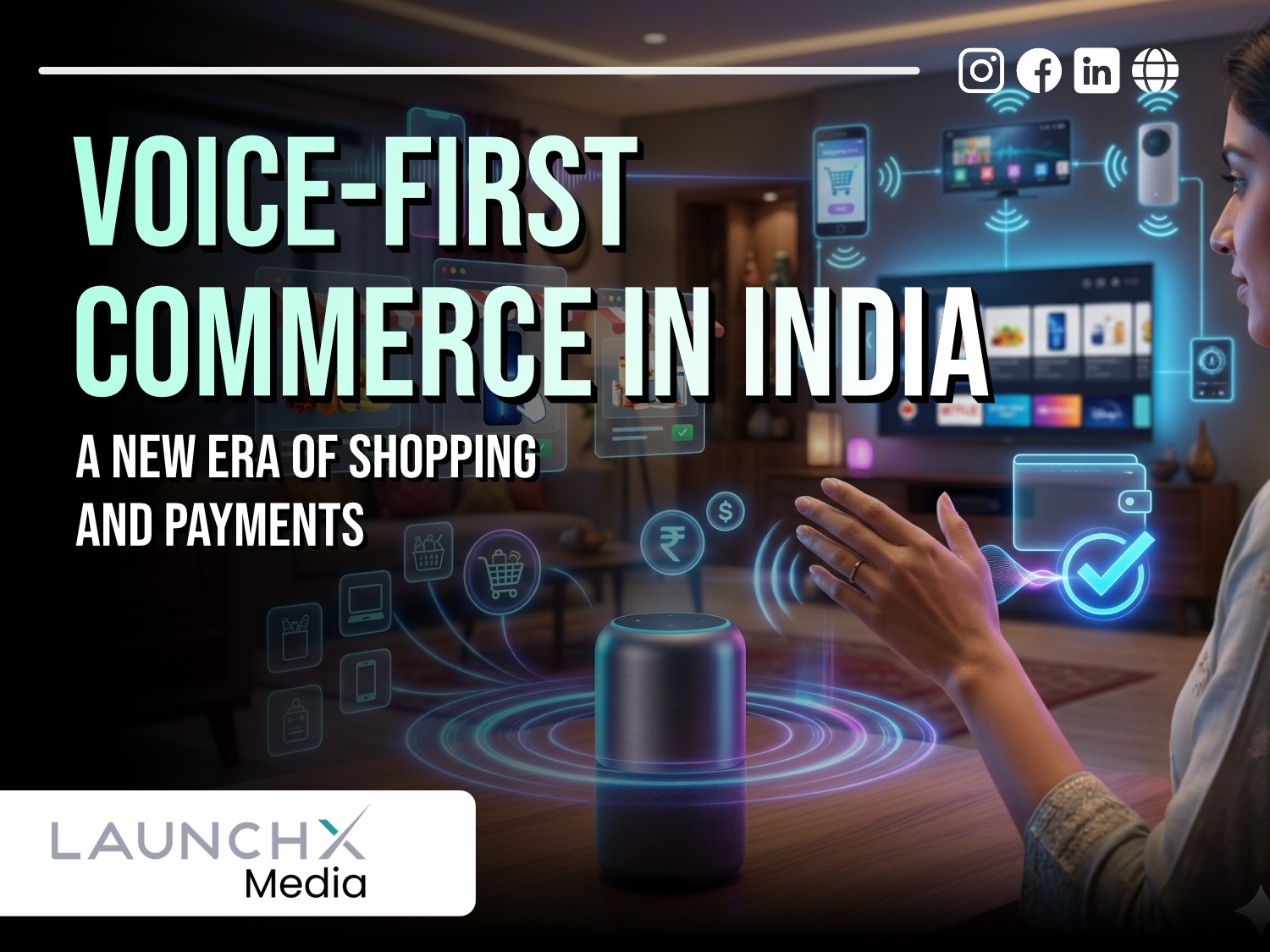

Voice-First Commerce in India: A New Era of Shopping and Payments
Voice Commerce in India: 7 Powerful Ways It Will Transform Online Shopping
India’s digital economy is evolving at an extraordinary pace, and the latest innovation in this journey is voice-first conversational commerce. With the introduction of AI-driven voice-based shopping and payment solutions, the way consumers interact with online platforms is set to transform dramatically.
- Voice Commerce in India: 7 Powerful Ways It Will Transform Online Shopping
- What is Voice-First Conversational Commerce?
- Why This Innovation Matters for India
- The Role of AI in Transforming Payments
- Impact on E-commerce and Businesses
- Challenges to Overcome
- The Future of Voice Commerce in India
- Final Thoughts
- FAQs (10)
- 1. What is voice-first commerce?
- 2. How does conversational commerce work?
- 3. Is voice-based payment secure?
- 4. Who can benefit from voice commerce in India?
- 5. Does voice commerce support regional languages?
- 6. Will voice commerce replace traditional apps?
- 7. What industries can adopt voice commerce?
- 8. What are the main challenges of voice commerce?
- 9. Is this technology available on smartphones?
- 10. What is the future of voice commerce in India?
A new collaboration between fintech and artificial intelligence is pushing boundaries, enabling users to simply “say what they want” and complete purchases seamlessly. This marks a significant step toward making digital commerce more intuitive, accessible, and inclusive.

What is Voice-First Conversational Commerce?
Voice-first conversational commerce is a technology that allows users to browse, select, and purchase products using natural voice commands instead of typing or clicking. Powered by advanced artificial intelligence, it understands human language, interprets intent, and executes transactions in real time.
How It Works
- Users speak naturally in their preferred language
- AI processes the request and suggests products or actions
- The system confirms the order
- Payment is completed through secure digital channels
This creates a smooth, hands-free shopping experience that feels more like a conversation than a transaction.
Why This Innovation Matters for India
India is uniquely positioned to benefit from voice-based commerce due to its linguistic diversity and rapidly growing internet user base. Millions of users, especially from Tier 2 and Tier 3 cities, face barriers when navigating text-heavy digital platforms.
Key Benefits
1. Accessibility for All
Voice commerce eliminates the need for typing skills or English proficiency, making digital platforms accessible to a broader audience.
2. Faster Transactions
Speaking is quicker than typing, which reduces friction in the buying process and improves conversion rates.
3. Regional Language Support
AI-driven systems can understand multiple Indian languages, enabling deeper market penetration.
4. Inclusive Digital Growth
This technology empowers first-time internet users to participate in the digital economy confidently.
The Role of AI in Transforming Payments
Artificial intelligence is the backbone of conversational commerce. It enables systems to understand context, intent, and even nuances in speech.
Key AI Capabilities
- Natural Language Processing (NLP) for understanding speech
- Context awareness for personalized recommendations
- Real-time decision-making for quick transactions
- Fraud detection and secure payment processing
By combining AI with digital payment infrastructure, the shopping journey becomes both intelligent and secure.
Impact on E-commerce and Businesses
Voice-first commerce is not just a consumer convenience—it is a game-changer for businesses.
Opportunities for Businesses
1. Higher Conversion Rates
Simplified interactions reduce drop-offs during checkout.
2. Enhanced Customer Engagement
Conversational interfaces feel more personal and interactive.
3. Wider Market Reach
Businesses can tap into non-English speaking audiences and rural markets.
4. Reduced Learning Curve
Users don’t need to learn how to use apps—speaking comes naturally.

Challenges to Overcome
While the potential is massive, voice commerce also comes with its own set of challenges.
Key Concerns
- Accuracy in understanding diverse accents and dialects
- Data privacy and security issues
- Building trust among first-time users
- Integration with existing platforms
Addressing these challenges will be crucial for long-term success.
The Future of Voice Commerce in India
Voice-first technology is expected to play a major role in shaping the future of India’s digital ecosystem. As AI models become more advanced and regional language support improves, adoption is likely to accelerate.
What Lies Ahead
- Integration with smart devices and IoT
- Hyper-personalized shopping experiences
- Expansion into sectors like banking, healthcare, and education
- Increased adoption in rural and semi-urban regions
This shift signals a move toward a more natural and human-centric digital experience.
Final Thoughts
Voice-first conversational commerce represents a powerful leap forward in how Indians shop and transact online. By removing barriers and simplifying interactions, it has the potential to bring millions of new users into the digital economy.
As technology continues to evolve, one thing is clear: the future of commerce in India may not be typed or tapped—it will be spoken.

FAQs (10)
1. What is voice-first commerce?
Voice-first commerce allows users to shop and make payments using voice commands instead of typing.
2. How does conversational commerce work?
It uses AI to understand spoken language, suggest products, and complete transactions through a conversational interface.
3. Is voice-based payment secure?
Yes, it uses advanced encryption, authentication, and fraud detection systems to ensure security.
4. Who can benefit from voice commerce in India?
Anyone, especially users from non-English speaking backgrounds and rural areas.
5. Does voice commerce support regional languages?
Yes, modern AI systems are designed to understand multiple Indian languages.
6. Will voice commerce replace traditional apps?
Not entirely, but it will complement and enhance existing digital experiences.
7. What industries can adopt voice commerce?
E-commerce, banking, healthcare, education, and more.
8. What are the main challenges of voice commerce?
Accuracy, privacy concerns, and user trust are key challenges.
9. Is this technology available on smartphones?
Yes, it can be integrated into mobile apps and smart devices.
10. What is the future of voice commerce in India?
It is expected to grow rapidly and become a mainstream method of digital interaction.


