

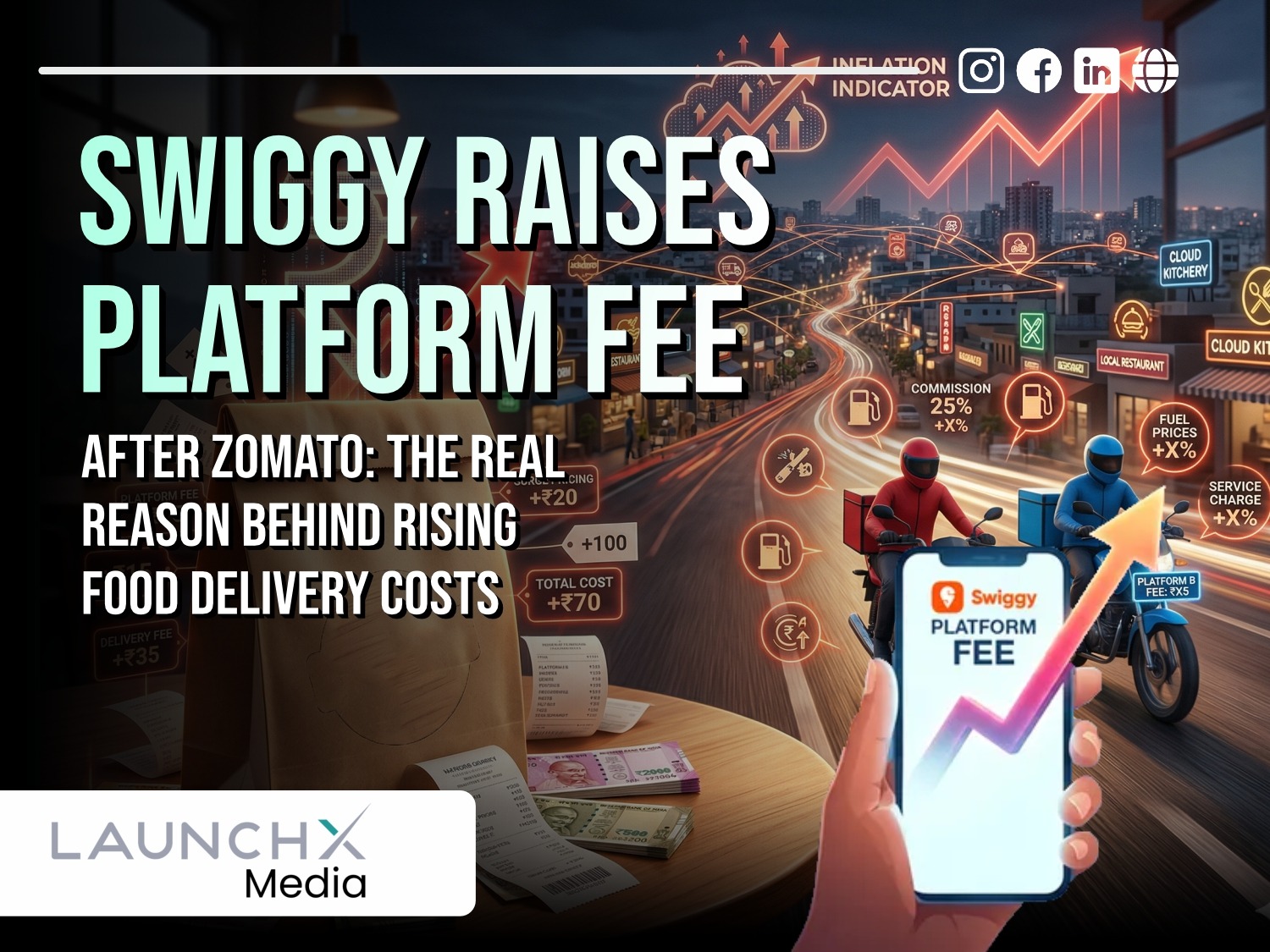

Swiggy Raises Platform Fee After Zomato: The Real Reason Behind Rising Food Delivery Costs
Swiggy Platform Fee Hike: 8 Big Truths About Food Delivery Pricing in India
Ordering food online in India is no longer as cheap as it once felt. In a move that reflects a broader industry trend, Swiggy has increased its platform fee per order—following a similar step taken earlier by Zomato. While the hike may seem small at first glance, it signals a deeper shift in how food delivery companies are approaching profitability.
This change is not just about a few extra rupees—it’s about the future of India’s food delivery ecosystem.
The Latest Update: What Has Changed?
Swiggy has raised its platform fee per order, aligning with the pricing strategy already adopted by Zomato. The platform fee is a fixed charge added to every order, separate from delivery fees, restaurant charges, and taxes.
For users, this means slightly higher total bills. But for companies, it represents a crucial step toward sustainable business operations.

Why Are Food Delivery Platforms Increasing Fees?
The Profitability Challenge
For years, food delivery platforms focused heavily on growth—offering discounts, free delivery, and cashback deals to acquire customers. While this strategy helped build massive user bases, it also led to significant financial losses.
Now, the focus is shifting.
Companies like Swiggy and Zomato are under pressure to reduce losses and demonstrate profitability. Increasing platform fees is one of the simplest and most direct ways to improve margins.
Rising Operational Costs
Running a food delivery platform involves multiple cost layers:
- Delivery partner payouts
- Fuel and logistics expenses
- Technology infrastructure
- Customer support operations
As these costs continue to rise, companies are adjusting pricing models to stay financially viable.
Reduced Discounting Era
The era of heavy discounts is gradually fading. Instead of subsidizing orders, platforms are now encouraging users to pay closer to the actual cost of convenience.
Understanding Platform Fees: What Are You Paying For?
More Than Just Delivery
Many users assume delivery fees cover all logistics, but platform fees are designed to support:
- App maintenance and development
- Payment processing systems
- Customer experience improvements
Small Fee, Big Impact
While the fee per order may seem minimal, it adds up significantly across millions of transactions—making it a powerful revenue lever for companies.
How This Impacts Consumers
Higher Cost Per Order
Users will notice a gradual increase in total order value. While each hike may be small, frequent users could feel the difference over time.
Smarter Ordering Behavior
Customers may start:
- Comparing prices across platforms
- Reducing order frequency
- Opting for larger orders to justify fees
Shift Toward Subscriptions
Subscription models offering free delivery or reduced fees may become more attractive as standalone charges increase.

Industry Trend: A Move Toward Sustainable Growth
From Growth to Profitability
The food delivery industry in India is entering a new phase—where profitability matters as much as scale.
Standardization of Fees
With both major players adopting similar pricing strategies, platform fees could become a standard component of food delivery pricing.
Impact on Smaller Players
Smaller startups may find it challenging to compete if they cannot match pricing while maintaining margins.
The Bigger Picture: Is This the New Normal?
Consumer Adaptation
Just like ride-hailing services, users may gradually accept platform fees as part of the cost of convenience.
Business Sustainability
For companies, consistent revenue streams like platform fees are essential to achieving long-term sustainability.
Innovation Ahead
To justify higher charges, platforms will likely invest more in:
- Faster delivery
- Better user experience
- Exclusive restaurant partnerships
What Lies Ahead for Food Delivery in India?
The increase in platform fees is not an isolated move—it’s part of a broader transformation in the industry. As companies balance growth with profitability, users can expect more structured pricing models and fewer subsidies.
While this may slightly increase costs for consumers, it also ensures that the ecosystem remains stable and continues to evolve.
In the long run, a profitable food delivery industry is more likely to deliver better services, innovation, and reliability.

- FAQs
- What is a platform fee in food delivery apps?
It is a fixed charge added to each order to cover operational and technology costs.
- Why did Swiggy increase its platform fee?
To improve profitability and manage rising operational expenses.
- Did Zomato also increase its fees?
Yes, Zomato introduced similar platform fee hikes earlier.
- How does this affect customers?
Customers will pay slightly more per order.
- Is the delivery fee the same as the platform fee?
No, both are separate charges.
- Will food delivery become more expensive?
Gradually, yes, as companies reduce discounts and optimize pricing.
- Are discounts going away completely?
Not entirely, but they are becoming less aggressive.
- Can users avoid platform fees?
Usually no, unless covered under specific subscription plans.
- Why are food delivery companies focusing on profitability now?
Due to investor pressure and long-term sustainability goals.
- What is the future of food delivery pricing?
More balanced pricing with fewer subsidies and consistent fees.


