

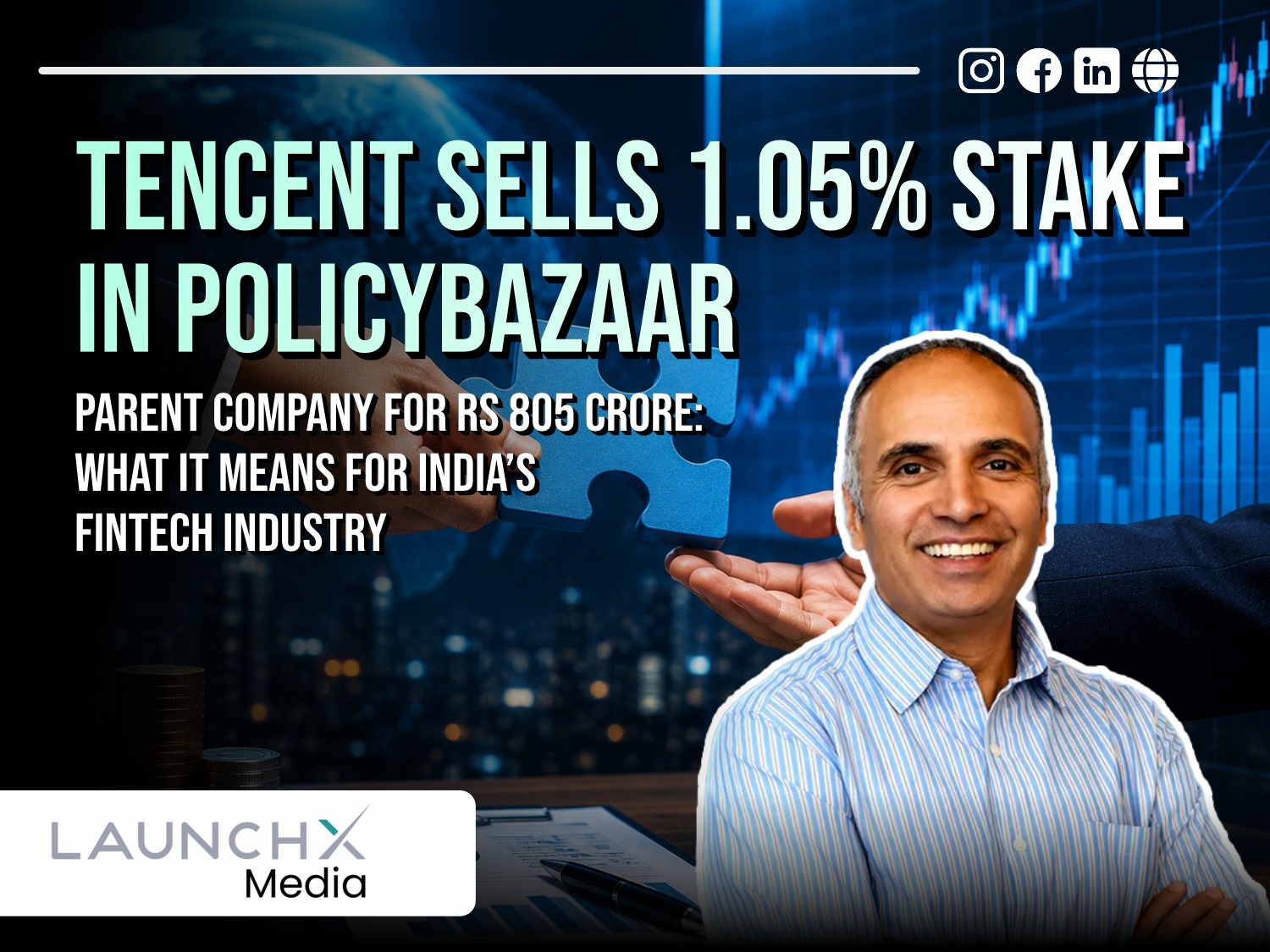

Tencent Sells 1.05% Stake in Policybazaar Parent Company for Rs 805 Crore: What It Means for India’s Fintech Industry
Tencent Sells 1.05% Stake in Policybazaar for Rs 805 Crore: 7 Major Market Insights
China-based technology giant Tencent has reportedly sold a 1.05% stake in PB Fintech, the parent company of Policybazaar, in a deal valued at nearly Rs 805 crore. The development has quickly become one of the most talked-about stories in India’s fintech and startup ecosystem, triggering discussions around investor sentiment, foreign investment strategies, and the future outlook of India’s digital financial services sector.
- Tencent Sells 1.05% Stake in Policybazaar for Rs 805 Crore: 7 Major Market Insights
- Understanding the Stake Sale
- Why Tencent’s Move Is Getting Attention
- Policybazaar’s Growth Story in India
- PB Fintech’s Expanding Ecosystem
- India’s Fintech Industry Continues to Grow Rapidly
- What Tencent’s Stake Sale Could Mean for Investors
- How the Market May View PB Fintech Going Forward
- Challenges Facing India’s Fintech Companies
- Global Investors and India’s Startup Ecosystem
- Future Outlook for Policybazaar and PB Fintech
- Conclusion
- FAQs
- 1. What is PB Fintech?
- 2. How much stake did Tencent sell?
- 3. What was the value of the transaction?
- 4. What is Policybazaar?
- 5. Why did Tencent sell its stake?
- 6. Is Tencent fully exiting PB Fintech?
- 7. What industry does PB Fintech operate in?
- 8. Why is India’s fintech market growing rapidly?
- 9. What services does Policybazaar provide?
- 10. What challenges does the fintech industry face?
The transaction comes at a time when Indian fintech companies are navigating a rapidly evolving market landscape marked by rising digital adoption, regulatory changes, investor caution, and increasing competition.
For many market observers, Tencent’s partial exit is not just a routine stake sale. It reflects broader trends shaping the global technology investment environment and India’s maturing startup ecosystem.
Understanding the Stake Sale
PB Fintech, the company behind popular insurance marketplace Policybazaar and credit platform Paisabazaar, has emerged as one of India’s leading fintech firms over the past decade.
Tencent, one of the early global investors in India’s startup ecosystem, had invested in several Indian technology companies during the country’s startup boom years. Its investment in PB Fintech was viewed as part of its broader strategy to gain exposure to India’s rapidly expanding digital economy.
The recent sale of a 1.05% stake for approximately Rs 805 crore indicates that Tencent is monetizing a portion of its holdings while still reflecting the strong market value of the company.
Such stake sales are common among institutional investors, especially after companies become publicly listed and early investors look to rebalance portfolios or unlock returns.

Why Tencent’s Move Is Getting Attention
The transaction has drawn significant attention because Tencent is one of the largest global technology investment firms with a long history of backing high-growth startups.
Several Key Factors Make This Sale Important
India-China Investment Dynamics
Over the last few years, Chinese investments into Indian startups have faced tighter scrutiny and regulatory oversight. As a result, Chinese investors have gradually reduced or restructured exposure in some Indian companies.
Market Sentiment Around Fintech
Fintech remains one of India’s fastest-growing digital sectors. Any major transaction involving leading fintech firms naturally attracts investor attention.
Public Market Maturity
India’s startup ecosystem is entering a phase where listed technology companies are increasingly seeing secondary share transactions, institutional exits, and portfolio restructuring.
Investor Confidence
Despite the stake sale, PB Fintech continues to attract strong investor interest due to its market position and long-term growth potential.
Policybazaar’s Growth Story in India
Policybazaar has played a major role in transforming how Indians purchase insurance products.
Before digital insurance marketplaces became popular, buying insurance was often a complex and offline-heavy process involving paperwork, multiple agents, and limited transparency.
Policybazaar simplified the process through technology-driven comparison tools, digital onboarding, and easier access to financial products.
Today, millions of users rely on the platform for:
- Health insurance
- Life insurance
- Motor insurance
- Travel insurance
- Investment products
- Credit and loan services
Its growth reflects the larger digital transformation taking place in India’s financial services industry.
PB Fintech’s Expanding Ecosystem
PB Fintech has evolved beyond a simple insurance comparison platform.
The company now operates a broader fintech ecosystem that includes:
Policybazaar
Focused on insurance products and digital insurance services.
Paisabazaar
Provides credit-related products including loans and credit cards.
Digital Financial Services
The company continues investing in customer acquisition, technology infrastructure, and AI-driven financial solutions.
This diversification strategy strengthens the company’s long-term scalability and revenue opportunities.
India’s Fintech Industry Continues to Grow Rapidly
India is currently one of the world’s fastest-growing fintech markets.
The combination of:
- Smartphone penetration
- Affordable internet access
- UPI adoption
- Digital banking growth
- Rising financial awareness
- Government-led digitization initiatives
has created enormous opportunities for fintech companies.
Consumers increasingly prefer digital financial services due to convenience, transparency, and faster processing times.
Policybazaar has benefited directly from this digital shift.
What Tencent’s Stake Sale Could Mean for Investors
Stake sales by institutional investors can sometimes create uncertainty in the market. However, they can also represent routine financial portfolio decisions.
Possible Interpretations of the Sale
Portfolio Rebalancing
Large investors often reduce holdings after companies mature or go public.
Profit Booking
Early investors may monetize gains after significant valuation growth.
Regulatory Adjustments
Cross-border investment dynamics may influence strategic decisions.
Liquidity Management
Global investors regularly optimize capital allocation across markets.
Importantly, a partial stake sale does not necessarily indicate negative sentiment toward the company’s future prospects.
How the Market May View PB Fintech Going Forward
PB Fintech remains one of India’s most recognized digital financial services brands.
Key Strengths Supporting Future Growth
Strong Brand Recognition
Policybazaar has built high consumer trust in online insurance services.
Large User Base
Millions of Indians use the platform for insurance and financial products.
Expanding Financial Awareness
Insurance penetration in India still remains relatively low compared to developed markets, creating long-term growth potential.
Technology-Driven Platform
AI-driven recommendations, digital onboarding, and data analytics improve customer experience.
Cross-Selling Opportunities
The company can offer multiple financial products to existing users.
These factors continue to support investor optimism around India’s fintech sector.

Challenges Facing India’s Fintech Companies
Despite strong growth potential, fintech firms also face several challenges.
Regulatory Complexity
Financial services remain highly regulated, requiring strong compliance frameworks.
Customer Acquisition Costs
Fintech companies often spend heavily on marketing and customer onboarding.
Competitive Pressure
The market is crowded with startups, banks, NBFCs, and digital platforms competing for users.
Profitability Expectations
Public market investors increasingly expect fintech firms to demonstrate sustainable profitability.
PB Fintech, like many digital-first companies, must balance rapid growth with financial discipline.
Global Investors and India’s Startup Ecosystem
Over the last decade, global investors played a major role in shaping India’s startup landscape.
International firms invested billions of dollars across sectors including:
- Fintech
- E-commerce
- EdTech
- SaaS
- Quick commerce
- Mobility
- Consumer internet
As India’s startup ecosystem matures, many early investors are now entering partial exit phases through IPOs, secondary sales, and market transactions.
This is considered a natural evolution of startup investment cycles.
Future Outlook for Policybazaar and PB Fintech
The long-term outlook for PB Fintech remains closely tied to India’s growing digital financial ecosystem.
Future Growth Drivers Could Include
Rising Insurance Penetration
A large portion of India’s population still lacks adequate insurance coverage.
Expansion Into Tier 2 and Tier 3 Cities
Digital adoption beyond metros is accelerating rapidly.
AI and Automation
Technology can improve underwriting, personalization, and customer servicing.
Financial Inclusion Initiatives
Government-backed digital finance initiatives continue expanding the market.
Cross-Selling Financial Products
Integrated financial ecosystems can improve customer retention and revenue growth.
If PB Fintech successfully executes its growth strategy, it could continue strengthening its leadership position in India’s fintech market.
Conclusion
Tencent’s sale of a 1.05% stake in PB Fintech for Rs 805 crore represents more than just a financial transaction. It reflects the evolving maturity of India’s startup ecosystem, changing global investment strategies, and the growing importance of digital financial services in India.
While market participants may interpret the transaction differently, the broader fundamentals of India’s fintech sector remain strong.
Policybazaar continues to operate in a high-growth industry supported by rising digital adoption, increasing financial awareness, and expanding online financial services demand.
As India’s fintech landscape evolves further, PB Fintech is likely to remain one of the most closely watched companies in the sector.

FAQs
1. What is PB Fintech?
PB Fintech is the parent company of Policybazaar and Paisabazaar.
2. How much stake did Tencent sell?
Tencent reportedly sold a 1.05% stake in PB Fintech.
3. What was the value of the transaction?
The stake sale was valued at around Rs 805 crore.
4. What is Policybazaar?
Policybazaar is an online insurance marketplace in India.
5. Why did Tencent sell its stake?
The sale may be part of portfolio rebalancing, profit booking, or strategic investment adjustments.
6. Is Tencent fully exiting PB Fintech?
No, the reported transaction involved only a partial stake sale.
7. What industry does PB Fintech operate in?
PB Fintech operates in the fintech and digital financial services sector.
8. Why is India’s fintech market growing rapidly?
Digital payments, smartphone adoption, and online financial awareness are driving growth.
9. What services does Policybazaar provide?
The platform offers insurance comparison, policy purchases, and financial services.
10. What challenges does the fintech industry face?
Major challenges include regulation, competition, profitability pressure, and customer acquisition costs.


