

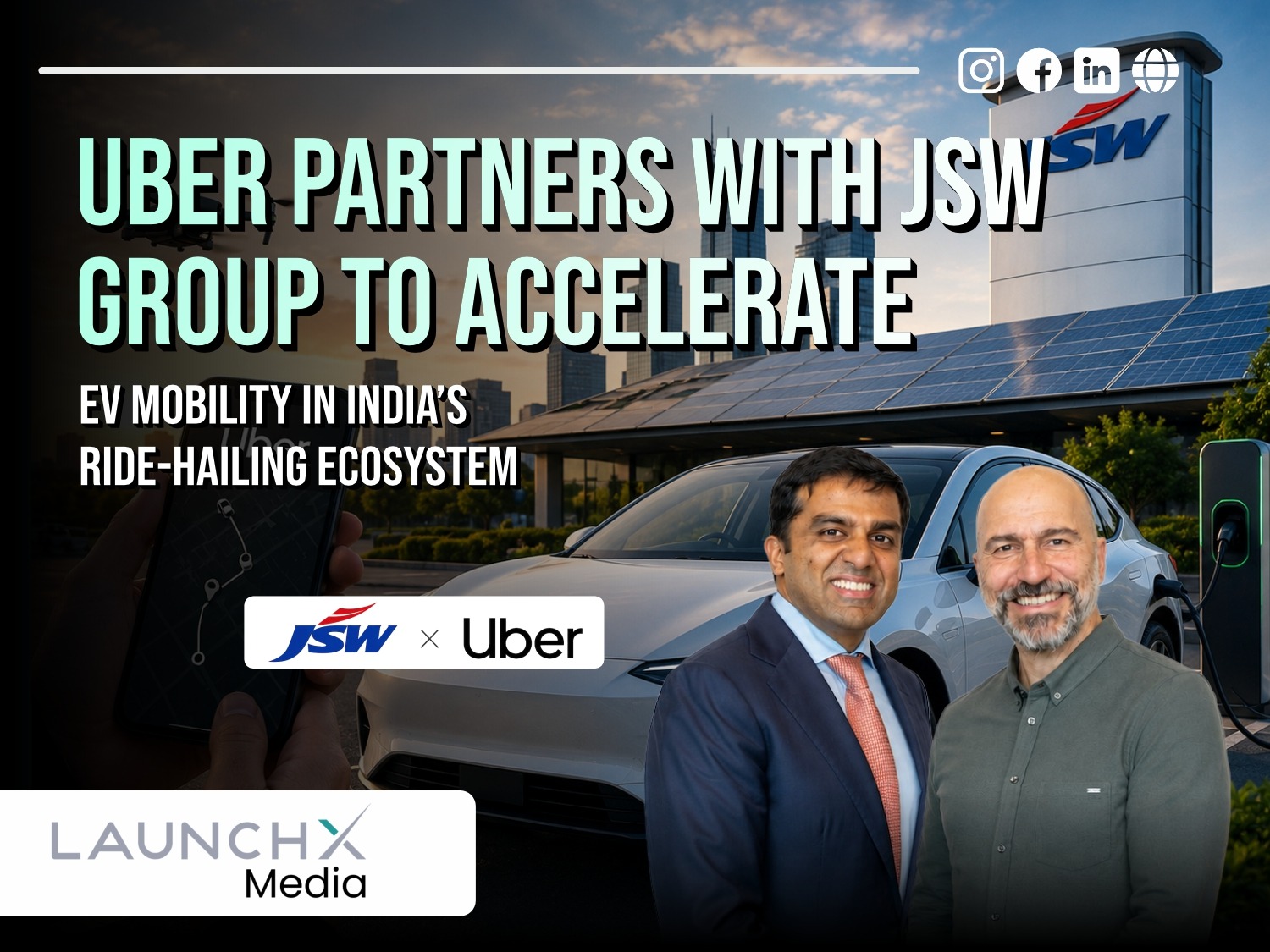

Uber Partners With JSW Group to Accelerate EV Mobility in India’s Ride-Hailing Ecosystem
Uber-JSW EV Partnership 2026: Powerful Boost for Indias Electric Ride-Hailing Future
India’s electric mobility revolution is gaining serious momentum. In a major development for the country’s transportation and clean energy ecosystem, Uber has partnered with JSW Group to strengthen electric vehicle adoption across India’s rapidly growing ride-hailing market.
- Uber-JSW EV Partnership 2026: Powerful Boost for Indias Electric Ride-Hailing Future
- Why This Partnership Matters for India’s EV Industry
- India’s Ride-Hailing Industry Is Entering an EV Era
- Understanding the Uber-JSW Collaboration
- The Bigger Goal: Sustainable Urban Transportation
- How EV Adoption Benefits Ride-Hailing Drivers
- Charging Infrastructure Remains the Biggest Challenge
- India’s EV Ecosystem Is Growing Rapidly
- Government Policies Are Supporting EV Expansion
- The Future of Ride-Hailing Could Become Fully Electric
- Technology Is Driving the EV Mobility Revolution
- Opportunities for Startups in the EV Ecosystem
- Challenges That Still Need to Be Solved
- High Initial Vehicle Costs
- Charging Downtime
- Battery Lifecycle Concerns
- Infrastructure Gaps
- Financing Accessibility
- Why This Partnership Could Influence the Entire Industry
- Final Thoughts
- FAQs
The collaboration signals a strategic push toward sustainable urban transportation while addressing one of the biggest challenges facing India’s mobility sector — the transition from fuel-powered fleets to electric vehicles.
As ride-hailing platforms increasingly look toward greener alternatives, the Uber-JSW partnership could play a crucial role in reshaping how millions of Indians commute daily.
The move also reflects a broader trend emerging across India’s mobility ecosystem, where technology companies, automakers, infrastructure providers, and industrial conglomerates are working together to accelerate EV adoption.
Why This Partnership Matters for India’s EV Industry
India is currently one of the fastest-growing electric vehicle markets in the world. Rising fuel prices, government incentives, environmental concerns, and urban pollution challenges are driving rapid interest in electric mobility solutions.
However, large-scale EV adoption in ride-hailing still faces several barriers:
- High upfront vehicle costs
- Limited charging infrastructure
- Driver financing challenges
- Battery range concerns
- Fleet management complexity
- Charging downtime
The partnership between Uber and JSW Group aims to address several of these issues by combining mobility technology with industrial and infrastructure capabilities.
This collaboration has the potential to accelerate the electrification of ride-hailing fleets across major Indian cities.

India’s Ride-Hailing Industry Is Entering an EV Era
The Indian ride-hailing sector has evolved dramatically over the past decade.
Initially focused on:
- Cab aggregation
- Digital payments
- Convenience
- App-based bookings
The industry is now shifting toward:
- Sustainability
- Fleet electrification
- Smart mobility
- Cost optimization
- Green transportation
Electric vehicles are becoming increasingly attractive for commercial ride-hailing because of lower operating costs compared to traditional fuel vehicles.
For drivers, EVs can offer:
- Reduced fuel expenses
- Lower maintenance costs
- Better long-term savings
For ride-hailing companies, EV fleets support:
- Sustainability goals
- Carbon reduction targets
- Regulatory compliance
- Brand positioning
The Uber-JSW alliance aligns directly with these industry-wide changes.
Understanding the Uber-JSW Collaboration
While the partnership is centered around scaling EV mobility, its larger importance lies in ecosystem development.
JSW Group brings significant industrial expertise in:
- Manufacturing
- Energy
- Infrastructure
- Steel production
- Renewable energy
- Battery ecosystem development
Uber contributes:
- Ride-hailing technology
- Driver network access
- Mobility analytics
- Consumer reach
- Fleet integration capabilities
Together, the companies may work toward creating an integrated EV ecosystem that supports both drivers and passengers.
The Bigger Goal: Sustainable Urban Transportation
India’s urban transportation systems face mounting pressure from:
- Traffic congestion
- Air pollution
- Fossil fuel dependency
- Rising fuel costs
- Climate concerns
Electric mobility is increasingly viewed as a long-term solution for sustainable urban development.
Major Indian cities are already witnessing:
- Growth in EV taxis
- Expansion of charging networks
- Electric bus deployment
- EV delivery fleets
- Government EV incentives
The Uber-JSW partnership could accelerate this transition further by bringing scale and operational efficiency into the ride-hailing segment.
How EV Adoption Benefits Ride-Hailing Drivers
One of the most important aspects of EV expansion is driver economics.
Commercial drivers often spend a large portion of their earnings on fuel costs. Electric vehicles can significantly improve profitability over time.
Lower Operating Costs
Electric vehicles generally have lower running costs than petrol or diesel vehicles.
Reduced Maintenance
EVs have fewer moving parts, reducing servicing and repair expenses.
Better Long-Term Savings
Although EVs may have higher upfront prices, long-term savings can improve driver income potential.
Government Incentives
Drivers may benefit from subsidies and incentives supporting EV adoption.
However, affordability remains a challenge for many drivers. Partnerships like this may help improve financing access and infrastructure support.
Charging Infrastructure Remains the Biggest Challenge
Despite strong EV momentum, charging infrastructure remains one of the largest bottlenecks in India’s electric mobility journey.
Common concerns include:
- Limited charging stations
- Long charging times
- Urban infrastructure gaps
- Peak-hour charging demand
- Battery range anxiety
This is where industrial players like JSW Group can play an important role.
The company’s capabilities in infrastructure and energy could help support:
- EV charging stations
- Battery ecosystem development
- Renewable-powered charging solutions
- Fleet charging networks
A stronger charging network is essential for scaling commercial EV fleets efficiently.
India’s EV Ecosystem Is Growing Rapidly
The EV sector in India is no longer limited to automakers alone.
The ecosystem now includes:
- Battery manufacturers
- Charging infrastructure companies
- Mobility startups
- Ride-hailing platforms
- Fleet operators
- Energy companies
- Software providers
- Financing firms
This interconnected ecosystem is necessary for mass EV adoption.
Collaborations between large corporations and technology platforms are becoming increasingly common because EV growth requires coordinated infrastructure development.
Government Policies Are Supporting EV Expansion
India’s EV push is also receiving strong policy support from both central and state governments.
Several initiatives encourage:
- EV manufacturing
- Battery production
- Charging infrastructure deployment
- Consumer adoption
- Fleet electrification
Policy incentives are helping reduce adoption barriers for companies and drivers.
The government’s broader goals include:
- Lower emissions
- Reduced oil imports
- Domestic manufacturing growth
- Clean energy transition
Large-scale partnerships like Uber and JSW align closely with these national sustainability objectives.
The Future of Ride-Hailing Could Become Fully Electric
The global ride-hailing industry is gradually moving toward electric fleets.
Companies worldwide are committing to:
- Net-zero goals
- Cleaner transportation
- Sustainable mobility models
India could emerge as one of the largest EV ride-hailing markets because of:
- High urban population density
- Daily commuting demand
- Smartphone penetration
- Digital payment adoption
- Rapid urbanization
If infrastructure continues improving, EV ride-hailing may eventually become the default mode for urban transportation.
Technology Is Driving the EV Mobility Revolution
Modern electric mobility is not just about vehicles. It is also powered heavily by software and data.
Ride-hailing platforms use technology for:
- Route optimization
- Driver allocation
- Demand forecasting
- Battery efficiency tracking
- Charging station mapping
- Fleet analytics
Artificial intelligence and smart mobility systems are becoming increasingly important for efficient EV fleet management.
As EV adoption scales, technology integration will become even more critical.
Opportunities for Startups in the EV Ecosystem
The rapid expansion of EV mobility is also creating opportunities for Indian startups.
Emerging startups are building solutions in:
- Battery swapping
- Charging infrastructure
- EV financing
- Fleet management
- Mobility software
- Smart energy systems
- EV maintenance
- Last-mile transportation
Large corporate partnerships often accelerate startup ecosystem growth by increasing infrastructure demand and market confidence.

Challenges That Still Need to Be Solved
While EV adoption is accelerating, several challenges remain.
High Initial Vehicle Costs
Electric vehicles remain expensive for many commercial drivers.
Charging Downtime
Long charging periods can reduce operational efficiency.
Battery Lifecycle Concerns
Battery replacement costs continue to be a concern for fleet operators.
Infrastructure Gaps
Smaller cities still lack adequate EV charging coverage.
Financing Accessibility
Many drivers require flexible financing models to transition to EVs.
The long-term success of EV mobility will depend on how effectively these challenges are addressed.
Why This Partnership Could Influence the Entire Industry
The Uber-JSW collaboration is significant because it combines:
- Technology
- Infrastructure
- Energy
- Transportation
- Fleet operations
This kind of integrated approach is likely to become more common as India builds its future mobility ecosystem.
The partnership could also encourage:
- More corporate EV alliances
- Faster charging infrastructure deployment
- Greater driver adoption
- Investor confidence in EV mobility
- Expansion of electric commercial fleets
It may serve as a blueprint for future mobility partnerships in India.
Final Thoughts
Uber’s partnership with JSW Group marks another major step in India’s transition toward sustainable mobility.
The collaboration reflects how the country’s transportation ecosystem is evolving from traditional ride-hailing models to technology-driven electric mobility solutions.
As India pushes toward cleaner transportation and reduced carbon emissions, EV-focused partnerships will become increasingly important for building scalable urban mobility infrastructure.
The success of this initiative could influence not only ride-hailing but also broader commercial transportation ecosystems across the country.
With rising consumer awareness, stronger government support, and rapid advancements in EV technology, India’s electric mobility future appears more promising than ever.

FAQs
- What is the Uber-JSW partnership about?
Uber and JSW Group have partnered to expand EV mobility in India’s ride-hailing ecosystem. - Why is this partnership important?
The collaboration supports electric vehicle adoption and sustainable transportation in India. - How can EVs benefit ride-hailing drivers?
EVs offer lower fuel costs, reduced maintenance expenses, and better long-term savings. - What challenges does EV adoption face in India?
Key challenges include charging infrastructure, affordability, financing, and battery concerns. - What role does JSW Group play in the partnership?
JSW Group brings expertise in infrastructure, energy, and industrial capabilities. - Why are ride-hailing companies shifting toward EVs?
Companies want to reduce emissions, lower operational costs, and meet sustainability goals. - Is India’s EV market growing rapidly?
Yes, India is one of the fastest-growing electric vehicle markets globally. - What sectors are involved in India’s EV ecosystem?
The ecosystem includes automakers, charging companies, startups, fleet operators, and energy firms. - How does technology support EV mobility?
Technology enables fleet management, route optimization, charging analytics, and smart mobility operations. - Which category best fits this article?
The best category is EV & Energy, with alternate categories including Tech, Innovation, and Startup News.


