

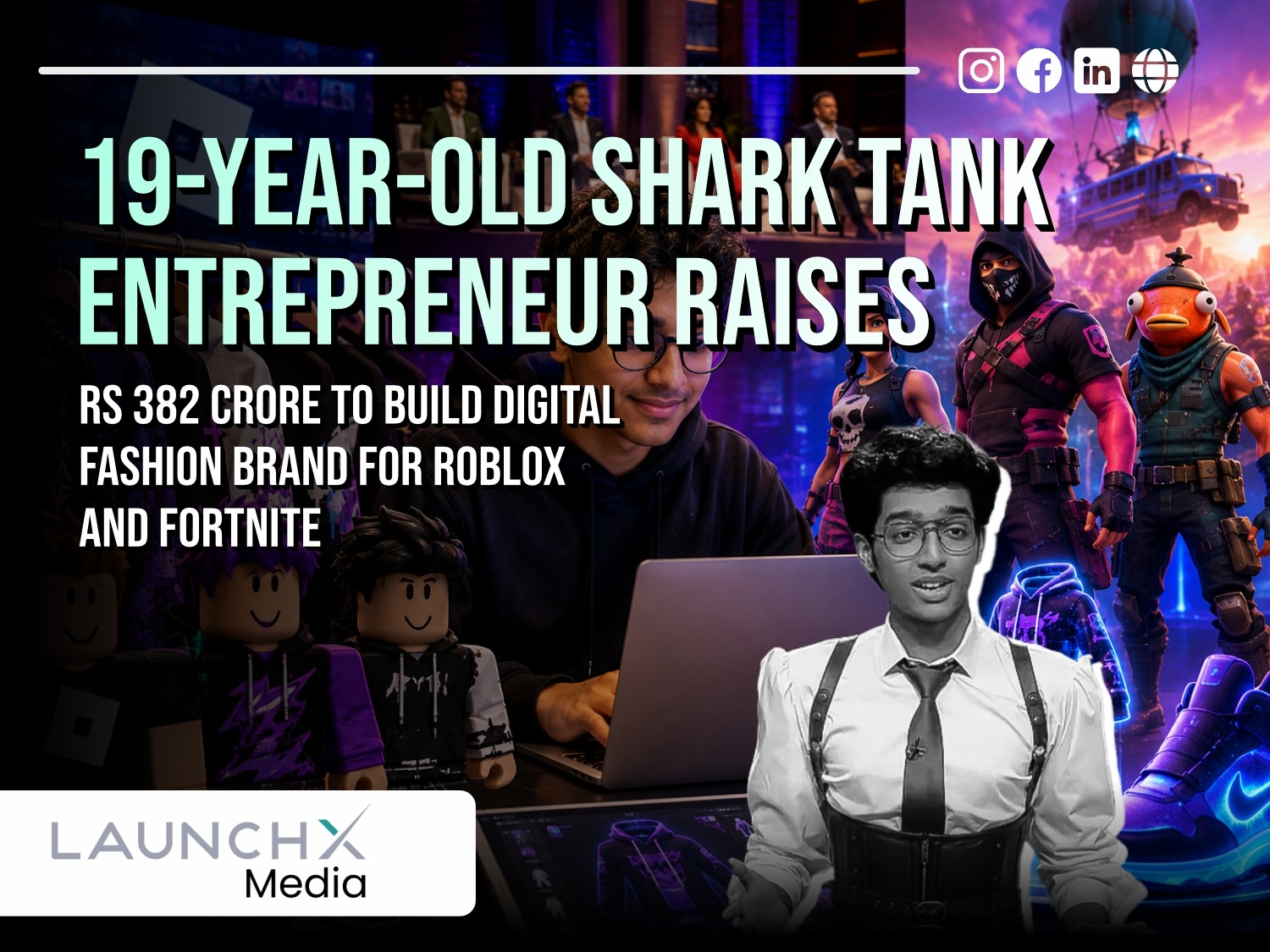

19-Year-Old Shark Tank Entrepreneur Raises Rs 382 Crore to Build Digital Fashion Brand for Roblox and Fortnite
19-Year-Old Shark Tank Entrepreneur Raises Rs 382 Crore to Build Digital Fashion Brand for Roblox and Fortnite
The intersection of gaming, fashion, and technology is creating one of the most exciting business opportunities of the decade. In a major development that reflects the growing power of virtual economies, a 19-year-old entrepreneur who gained attention through Shark Tank has raised Rs 382 crore to build a digital fashion brand focused on platforms like Roblox and Fortnite.
- 19-Year-Old Shark Tank Entrepreneur Raises Rs 382 Crore to Build Digital Fashion Brand for Roblox and Fortnite
- The Rise of Digital Fashion and Virtual Identity
- Why Investors Are Betting Big on Virtual Fashion
- Gaming Is Becoming the New Social Internet
- The Business of Avatar Commerce
- Why Gen Z Is Driving the Digital Fashion Revolution
- How Roblox and Fortnite Became Fashion Platforms
- The Evolution of Fashion Business Models
- The Role of Creator Economies in Virtual Fashion
- Why This Funding Is Significant for Indian Startups
- Challenges Facing Virtual Fashion Startups
- Platform Dependency
- Consumer Trend Volatility
- Monetization Competition
- Intellectual Property Concerns
- Market Education
- The Future of Fashion Could Be Hybrid
- AI and Technology Are Accelerating Digital Creativity
- The Bigger Picture: Virtual Economies Are Becoming Real Businesses
- Final Thoughts
- FAQs
The funding highlights how investors are increasingly betting on the future of virtual identity, avatar customization, gaming ecosystems, and Gen Z digital consumption habits.
While traditional fashion brands continue competing in physical retail and e-commerce, a new generation of startups is building fashion businesses designed entirely for virtual worlds.
This shift may sound futuristic, but for millions of young users spending hours inside gaming ecosystems, digital fashion is already becoming a mainstream form of self-expression.
The Rise of Digital Fashion and Virtual Identity
Fashion is no longer limited to physical clothing.
Today’s younger consumers increasingly express themselves through:
- Gaming avatars
- Virtual skins
- Digital accessories
- Online identities
- Social gaming platforms
- Metaverse experiences
Platforms like Roblox and Fortnite have evolved far beyond gaming. They are now:
- Social spaces
- Entertainment ecosystems
- Creator economies
- Digital marketplaces
- Virtual communities
Users spend significant time customizing their avatars with:
- Outfits
- Shoes
- Hairstyles
- Accessories
- Emotes
- Digital collectibles
For Gen Z and younger audiences, avatar appearance often carries the same social value as physical fashion.
This cultural shift is creating entirely new business categories.

Why Investors Are Betting Big on Virtual Fashion
The Rs 382 crore funding round reflects growing investor confidence in digital consumer behavior.
Virtual fashion has several advantages compared to traditional apparel businesses:
- No physical inventory
- Lower manufacturing costs
- Global scalability
- Instant distribution
- High profit margins
- Infinite design possibilities
Digital fashion brands can launch collections instantly across virtual platforms without dealing with:
- Warehousing
- Logistics
- Fabric sourcing
- Shipping delays
- Retail infrastructure
This creates a highly scalable business model.
At the same time, gaming platforms already host massive audiences with strong engagement levels.
Roblox alone attracts millions of daily active users globally, while Fortnite remains one of the largest online gaming ecosystems in the world.
For startups, these platforms represent massive digital marketplaces.
Gaming Is Becoming the New Social Internet
One of the biggest reasons behind the rise of digital fashion is the transformation of gaming itself.
Gaming is no longer just about competition or entertainment.
Modern gaming ecosystems now function as:
- Social networks
- Creator platforms
- Virtual hangout spaces
- Digital economies
- Content ecosystems
Young users attend:
- Virtual concerts
- Brand events
- Social gatherings
- Interactive experiences
inside gaming environments.
As digital interaction increases, avatar identity becomes more important.
This is where virtual fashion plays a central role.
The Business of Avatar Commerce
Avatar commerce is emerging as a major digital economy trend.
Players are increasingly willing to spend real money on:
- Character skins
- Limited-edition outfits
- Digital accessories
- Virtual collectibles
- Exclusive fashion drops
This behavior mirrors real-world fashion culture, where consumers seek:
- Exclusivity
- Personal identity
- Trend participation
- Social recognition
The difference is that virtual fashion operates entirely inside digital ecosystems.
For brands, this opens opportunities to monetize creativity in entirely new ways.
Why Gen Z Is Driving the Digital Fashion Revolution
Gen Z consumers are fundamentally different from previous generations.
They are:
- Digital-first
- Social-media native
- Gaming-oriented
- Community-driven
- Comfortable with virtual ownership
Many younger users already spend substantial amounts on digital items.
For them, virtual products are not viewed as “fake” purchases. Instead, digital ownership is becoming an accepted part of online identity.
This shift is fueling demand for:
- Digital collectibles
- NFTs
- Avatar customization
- Virtual luxury products
- Gaming cosmetics
The startup’s funding reflects confidence that this behavioral trend will continue growing globally.
How Roblox and Fortnite Became Fashion Platforms
Gaming companies are increasingly collaborating with global fashion brands.
Major brands have already launched:
- Virtual apparel drops
- Avatar skins
- Branded experiences
- Digital merchandise
inside platforms like Roblox and Fortnite.
These gaming ecosystems provide:
- Massive user engagement
- Social interaction
- Built-in creator economies
- Digital purchasing systems
Fashion brands are recognizing that younger consumers spend significant time inside these virtual environments.
As a result, gaming platforms are becoming important channels for brand discovery and customer engagement.
The Evolution of Fashion Business Models
Traditional fashion businesses depend heavily on:
- Manufacturing
- Retail distribution
- Physical inventory
- Supply chains
- Seasonal production cycles
Digital fashion changes this entirely.
Virtual apparel businesses can:
- Launch products instantly
- Scale globally
- Operate with lower overhead
- Experiment rapidly
- Reduce waste
This creates a more agile and potentially more profitable model.
The environmental angle is also gaining attention because digital fashion eliminates textile waste associated with fast fashion manufacturing.
The Role of Creator Economies in Virtual Fashion
Creator economies are becoming central to digital platform growth.
Many gaming ecosystems allow independent creators to:
- Design digital products
- Sell avatar accessories
- Build virtual experiences
- Monetize creativity
This creates opportunities for startups focused on:
- Fashion design tools
- Creator marketplaces
- Virtual commerce platforms
- Gaming monetization systems
The line between gaming company, social platform, and e-commerce marketplace is increasingly blurring.
Why This Funding Is Significant for Indian Startups
The funding round also reflects how Indian entrepreneurs are building globally relevant technology businesses.
Indian startups are no longer focused only on:
- E-commerce
- fintech
- food delivery
- SaaS
A new generation of founders is entering:
- Gaming economies
- Metaverse infrastructure
- Virtual commerce
- AI-driven creativity
- Digital entertainment ecosystems
The rise of digital-native founders is helping India participate in emerging global internet trends.

Challenges Facing Virtual Fashion Startups
Despite massive potential, digital fashion businesses still face several challenges.
Platform Dependency
Startups often depend heavily on gaming platforms like Roblox and Fortnite.
Changes in platform policies can impact growth and monetization.
Consumer Trend Volatility
Gaming trends evolve rapidly, making long-term audience retention difficult.
Monetization Competition
Thousands of creators and digital brands compete for user attention.
Intellectual Property Concerns
Protecting digital designs and virtual assets remains complex.
Market Education
Many traditional consumers still struggle to understand the value of digital fashion.
Despite these challenges, investor enthusiasm continues rising because of the sector’s long-term growth potential.
The Future of Fashion Could Be Hybrid
Experts increasingly believe the future of fashion may combine:
- Physical apparel
- Digital fashion
- Gaming identity
- AI-generated designs
- Virtual experiences
Brands may eventually launch both:
- Real-world clothing collections
- Digital avatar versions
simultaneously.
This hybrid commerce model could redefine how consumers interact with brands.
AI and Technology Are Accelerating Digital Creativity
Artificial intelligence is also playing a growing role in virtual fashion.
AI tools can help:
- Generate digital outfits
- Personalize avatar styles
- Predict fashion trends
- Create immersive experiences
- Automate design workflows
As AI-generated creativity improves, digital fashion production may become even faster and more scalable.
This is why many investors view virtual fashion as part of the broader future-tech ecosystem.
The Bigger Picture: Virtual Economies Are Becoming Real Businesses
The funding round reflects a major shift happening globally.
Virtual economies are no longer experimental concepts.
People already spend billions annually inside:
- Gaming ecosystems
- Digital platforms
- Virtual marketplaces
- Creator economies
Young users increasingly value:
- Digital ownership
- Online identity
- Virtual status
- Interactive experiences
Businesses that understand this shift may define the next era of internet commerce.
Final Thoughts
The 19-year-old entrepreneur’s Rs 382 crore funding round signals how rapidly the worlds of fashion, gaming, and technology are converging.
What once seemed like a niche internet trend is now becoming a serious global business category with strong investor interest and massive consumer engagement.
Platforms like Roblox and Fortnite are evolving into digital economies where identity, creativity, and commerce intersect.
As Gen Z consumers spend more time in virtual environments, digital fashion may become just as culturally significant as traditional apparel.
This startup’s ambitious vision reflects a larger transformation shaping the future of commerce — one where virtual identity becomes an increasingly valuable part of human expression and digital life.

FAQs
- What is digital fashion?
Digital fashion refers to virtual clothing and accessories designed for avatars and online identities. - Why are Roblox and Fortnite important for digital fashion?
These platforms have massive user bases where players customize avatars using digital items. - How much funding did the startup raise?
The startup raised Rs 382 crore. - Why are investors interested in virtual fashion?
Virtual fashion offers scalability, high margins, low inventory costs, and access to Gen Z audiences. - What is avatar commerce?
Avatar commerce involves buying and selling digital items for gaming avatars and virtual identities. - How is Gen Z influencing digital fashion?
Gen Z consumers are highly engaged with gaming, virtual identities, and online self-expression. - Can digital fashion become mainstream?
Yes, many experts believe digital fashion could become a major future commerce category. - What challenges do virtual fashion startups face?
Challenges include platform dependency, competition, market education, and changing gaming trends. - How does AI support digital fashion?
AI helps with design generation, personalization, trend analysis, and virtual creativity tools. - Which category best fits this article?
The best category is Startup Funding, with alternate categories including Tech, Innovation, and Emerging AI trends.


